Burnout recovery is not a sabbatical: the three-axis diagnostic, the six-hour rule, and what actually works
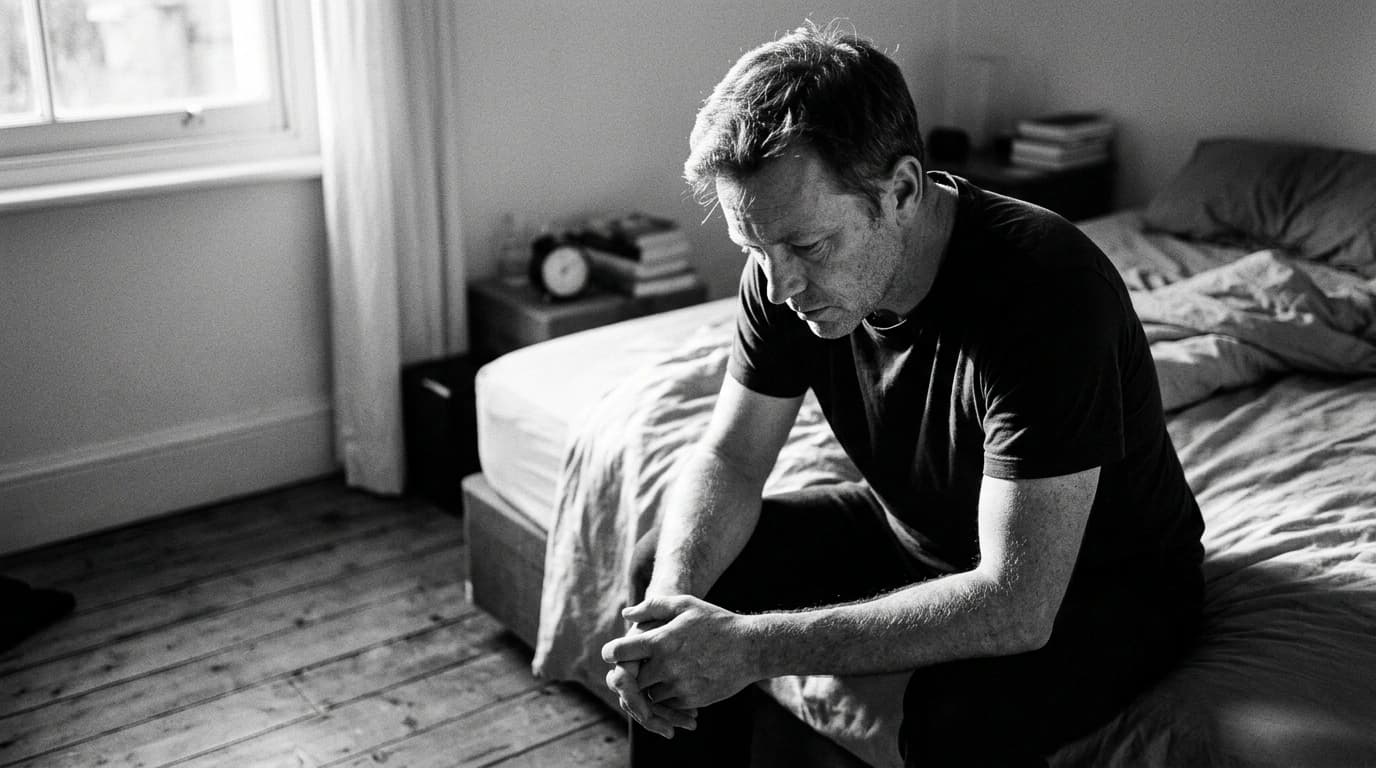
It was a Tuesday in October 2022, sometime after eleven. I was at my desk eating cold sushi out of a plastic clamshell, trying to fix a forecast that would not compile. I had been making the same arithmetic mistake every ninety minutes for three rounds in a row.
What burnout recovery actually looks like: the sabbatical-and-journal version does not work for most people. Recovery in clinical research and in practice is structural. It involves a change in the job, or in your relationship to the job. Two months off and a meditation app will not fix what twelve months of cynicism-axis drift broke. The six things below are what worked for me and what the evidence supports. You will know which apply to you by the end.
You probably did not see your own burnout coming, even though you may have been the one writing the engagement survey. Especially because of that, in retrospect.
The three axes you are probably only measuring one of
The burnout literature has converged, since the 1970s, on the model Christina Maslach developed at UC Berkeley. A five-minute self-score using her inventory is in our Maslach Burnout Inventory guide. The WHO added burnout to ICD-11 in 2019 specifically as an occupational phenomenon, using a version of Maslach's three-axis structure. The three axes are:
- Emotional exhaustion. The one most people notice. Sleep does not fix it. Weekends do not fix it.
- Depersonalization / cynicism. A slow accumulation of tone, when you talk about the job, that an earlier version of you would have heard and worried about.
- Reduced personal accomplishment. The strangest axis, because output can climb while quality drops, and you may be proudest of exactly the work that signals the drift.
I had been measuring myself only on axis 1. I was tired, sure, but I had been tired before and recovered. What I had not noticed was the cynicism: three Tuesdays in a row in late September 2022, I found I had no ability to remember why a project I was running mattered. That was the moment, looking back, when axis 2 hit a number that crossed some internal threshold.
If you read this and skip the three-axis check on yourself, the rest of this article will not help.
What the comparison loop is actually telling you
The hardest part of mid-burnout, looking back, was the comparison loop. Every Sunday you read about someone in your industry being promoted, building a startup, having a child, finishing a marathon. None of it is lies. All of it is curated. And the part of you that should know they are curated has gone offline along with your forecasting accuracy.
I will admit: at the bottom of burnout, I genuinely believed everyone else had figured something out that I had missed. That belief is itself an artifact of the depersonalization axis. It is a measurable, named clinical phenomenon, not a personal failure.
If you are reading this from somewhere that feels like the bottom: the comparison loop is a symptom of burnout, not data about other people's lives. Treat it that way. For a sense of scale, the verified numbers on how common burnout is say you have plenty of company.
Three interventions, ranked by what the evidence supports
These are ordered by what the clinical research actually backs, not by what reads best on Instagram.
| Intervention | Evidence backing | Time to first effect | What it actually requires |
|---|---|---|---|
| Structural change to the job | Strong (WHO ICD-11 framing; HHS Surgeon General 2022 Advisory) | 6-12 weeks | Real change in role, organization, scope, manager, or hours. Not "I will set boundaries this week." |
| A concrete six-hour-a-week role outside the job | Moderate (converges with re-engagement and autonomy research; Deci & Ryan's Self-Determination Theory) | 4-6 weeks | Paid, concrete, in-person, low-stakes work. Hardware store. Garden center. Bakery. Not a side project. |
| Rest plus internal-only practices (journal, sabbatical, meditation) | Weak as standalone; useful adjunct only | Often returns to baseline within weeks | Two months off + journal. Frequently the version the wellness industry sells. Rarely sufficient on its own. |
I did all three. The order matters: the structural change did most of the work, the six-hour role did almost as much, and the rest-and-journal version was a useful adjunct but never the recovery itself.
The six-hour rule
The single most under-reported intervention in burnout recovery: a concrete, in-person, paid, low-stakes job for about six hours a week outside your primary work.
After I left in November 2022, I worked three afternoons a week at a friend's small family hardware store in Marietta for $14 an hour. The work was concrete. It involved talking to people in person about specific objects. I did not have to forecast anything. Within five weeks I was sleeping again.
This intervention works for three reasons that show up across the autonomy and re-engagement literature:
- It re-establishes that work-as-such still exists outside the broken-relationship version you have with your current job.
- It restores a sense of completion (you ring up a customer; the transaction ends) that knowledge work rarely supplies.
- It puts you in contact with people whose problems are not your problems, which gradually thaws the depersonalization axis.
The income is beside the point. The six-hour-a-week shape is the point. Less than four hours and you do not get the rhythm; more than ten and it becomes its own performance.
The 60-day quit-or-restructure deadline
Most people stay in the burnout job for 18 months too long. The thing that fixed this for me was a written deadline.
Pick a date 60 days from now. (Calendar it. Not "in two months.") By that date, one of two things has to be true: (a) the job has materially changed (different role, different scope, different manager, materially fewer hours, or some combination); or (b) you have given notice.
The deadline is the part that does the work. It is not the leaving that fixes the burnout (mine got materially better four weeks before I quit, once the deadline was on the calendar). What fixes it is the moment your body registers that the situation is finite.
If you cannot give yourself a hard deadline because of dependent-care, mortgage, or other obligations: extend the deadline to 120 days and combine it with the runway calculation from a separate but related question, career change at 40.
What recovery actually felt like (it was not linear)
The 2022 U.S. Surgeon General's Advisory on health-worker burnout names the same pattern in clinical terms: organizational change, role-fit recalibration, restoration of meaning at work. Translated: burnout recovery is rarely an internal-only project. The job has to change, or your relationship to the job has to change. Reading more is not the recovery.
For me, the timeline ran approximately:
- Weeks 1-4: Worse before better. I slept twelve hours a night and stayed irritable.
- Weeks 5-12: The hardware-store rhythm did most of the visible work. Sleep stabilized. The cynicism axis softened first.
- Months 4-6: Judgment came back. I noticed it because I started catching arithmetic mistakes again, which I had stopped doing somewhere in month four of the burnout itself.
- Months 6-9: I rejoined the industry, at a different company, in a different function. Six months in, by some measures, the recovery was complete; by others I am still calibrating.
Practitioner observations and the intervention-research base point to a range of roughly 6-18 months, depending on severity and on whether the structural change is real. Quicker recoveries usually involve a real change in role or organization, not just rest. For the severity-by-window breakdown — mild, moderate, severe — see our companion piece on how long burnout recovery takes.
What I would tell you if you are at month four
Five things, in the order they would have helped me:
- Run the three-axis check, not just the exhaustion one. Ask one person who has known you for ten years whether your tone about work has changed.
- Do the wellness-industry version, but do not expect it to be the recovery. Journal, meditate, read Pema Chödrön. They are not the structural fix.
- Find a six-hour-a-week role. Concrete. In-person. Paid. Low-stakes.
- Set the 60-day quit-or-restructure deadline. Calendar it.
- Stop reading more burnout content for a while. Including this kind of essay. The metabolizing has to happen in your actual life, not in the comments section.
The spreadsheet eventually got finished. Someone else did it.
— Sam
References
- Maslach, C., & Jackson, S. E. (1981). The measurement of experienced burnout. Journal of Occupational Behavior, 2(2), 99-113.
- Maslach, C. (1982). Burnout: The Cost of Caring. Prentice-Hall.
- World Health Organization. (2019, May 28). Burn-out an "occupational phenomenon": International Classification of Diseases. who.int.
- U.S. Department of Health and Human Services, Office of the Surgeon General. (2022, May 23). Addressing Health Worker Burnout: The U.S. Surgeon General's Advisory on Building a Thriving Health Workforce. Archived at NCBI Bookshelf: ncbi.nlm.nih.gov/books/NBK595228.
- Deci, E. L., & Ryan, R. M. (2000). The "what" and "why" of goal pursuits: Human needs and the self-determination of behavior. Psychological Inquiry, 11(4), 227-268.
- Petersen, A. H. (2020). Can't Even: How Millennials Became the Burnout Generation. Houghton Mifflin Harcourt.
- Grant, A. (2021). Think Again: The Power of Knowing What You Don't Know. Viking.
- Chödrön, P. (1997). When Things Fall Apart: Heart Advice for Difficult Times. Shambhala.