Hedonic vs eudaimonic well-being: the difference, in plain examples
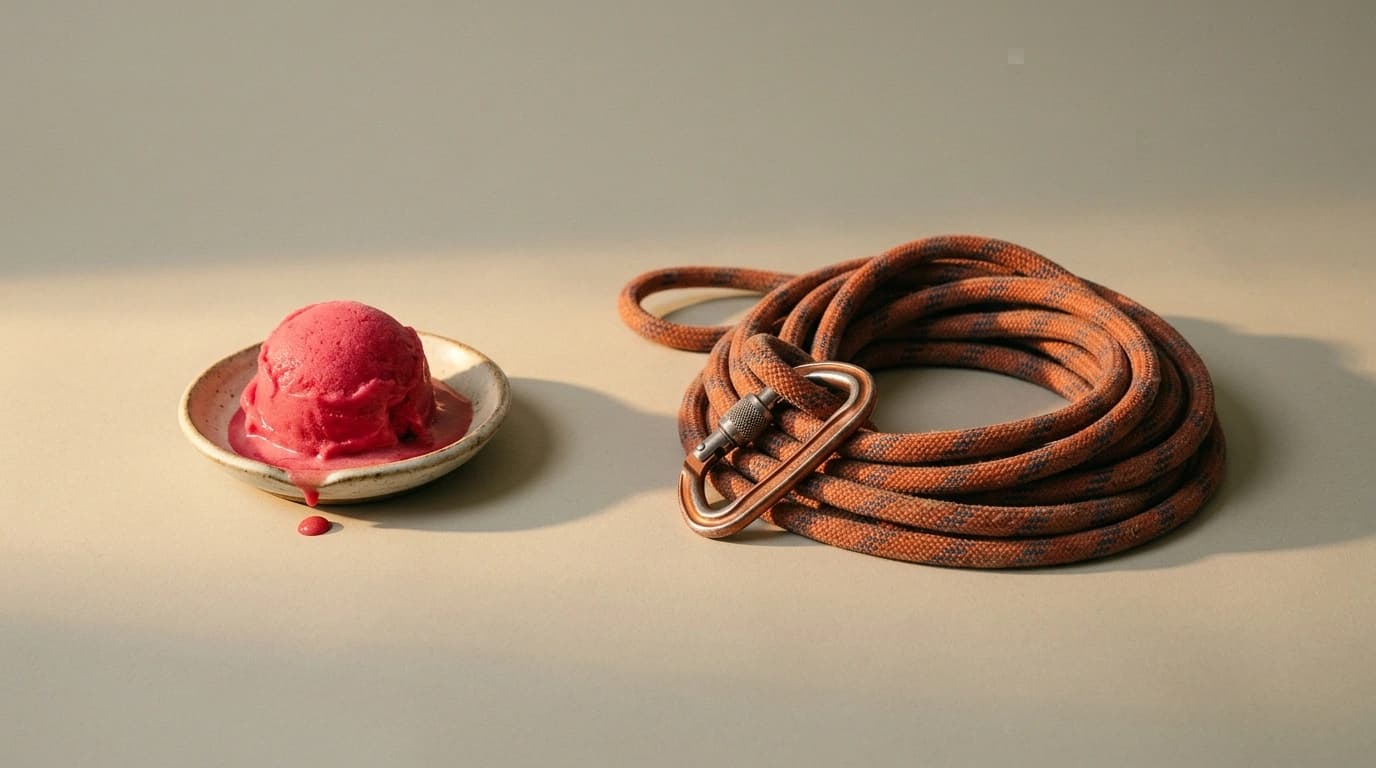
Hedonic and eudaimonic well-being are different categories, not different flavors
Hedonic well-being measures how a moment felt. Eudaimonic well-being measures whether a life is going well. The two answer different questions, and the difference between hedonic and eudaimonic happiness is the difference between asking was Thursday afternoon good and was this life worth living.
Most people, asked what the goal of life is, will say something close to "to be happy." That answer treats happiness as one thing: a felt-state. The well-being research from the last forty years has been undermining the assumption. The lives that feel best on a Wednesday afternoon at sixty are mostly the eudaimonic ones, built around meaning, contribution, and the slow accumulation of work that mattered, rather than the ones optimized for pleasure.
This matters for two reasons. First, when people search for "what would make me happier," they tend to optimize for the hedonic side (better vacations, better food, less work) and end up frustrated when the felt-state does not persist. Second, the hedonic vs eudaimonic well-being distinction is older than the research literature. It goes back to Aristotle, and the older frame keeps catching things that the modern frame rediscovers.
Hedonic well-being, in plain examples
Hedonic well-being is the felt-state of pleasure, comfort, and enjoyment. Some hedonic vs eudaimonic examples on the hedonic side:
- The cold beer after a long hike.
- The laugh at dinner with a friend.
- The warm shower at the end of a cold day.
- The vacation week in October when nothing was on the calendar.
- The first hour of a good novel.
These are not trivial. They are measurable, they affect health, and they are part of any reasonable account of a life worth living. The trouble is that they decay fast. Hedonic adaptation is the technical name for the slide: the brain returns to baseline within hours or days, and the pleasure that felt like everything on Friday night is mostly gone by Tuesday afternoon.
In Book I, Chapter 5 of the Nicomachean Ethics, Aristotle calls the life centered on pleasure "a life suitable to beasts." Pleasure itself is fine. His point is that pleasure cannot be the whole answer for a creature with reason. A life made of cold beers will, looked back on from the end, not feel like a life worth having had.
Eudaimonic well-being, in plain examples
What is eudaimonic well-being? The word comes from the Greek eudaimonia (εὐδαιμονία), often translated as "happiness" but more accurately rendered as "living well" or "flourishing." Scholars W. D. Ross and John Cooper both argued that "flourishing" is the cleaner English equivalent, and the Wikipedia entry on eudaimonia is a solid 2026 starting point.
Some eudaimonic well-being examples:
- The year of training that turned into the half-marathon you finished.
- The parent you sat with through chemo.
- The project at work that mattered to a specific person.
- The book a chapter of which got written every Sunday for two years.
- The friendship that survived three moves and two divorces.
In 1989, the psychologist Carol Ryff proposed a six-factor model of psychological well-being: self-acceptance, positive relationships, autonomy, environmental mastery, purpose in life, and personal growth. Ryff's model became the standard way of measuring eudaimonic well-being in academic psychology. Eleven years later, Richard Ryan and Edward Deci published the foundational paper on self-determination theory in American Psychologist, arguing that humans flourish when three basic needs are met: autonomy, competence, and relatedness. Both frameworks ask the same question from different angles: whether a life is going well, taken across the long arc.
Why the long-arc research keeps pointing to the eudaimonic side
Why is eudaimonia important if the hedonic felt-state of pleasure is real and measurable? Because the felt-state does not last, and the eudaimonic substrate does.
The clearest empirical anchor is Steptoe, Deaton, and Stone (2015), published in The Lancet. Following 9,050 English adults aged 50 and over for an average of 8.5 years, the authors found that participants in the lowest quartile of eudaimonic well-being had a 29.3% mortality rate over the follow-up window. Participants in the highest quartile had a 9.3% rate, roughly a threefold gap. The association held after controlling for age, sex, demographics, and baseline health. Eudaimonic well-being predicted survival. Momentary mood did not, once eudaimonia was accounted for.
That is not the only signal. The work on retrospective life-satisfaction in older adults consistently finds the same shape: at sixty and seventy, the people who report a strong felt-sense of having lived a good life are usually the people whose decades had a recognizable structure of contribution, craft, or care. People whose decades had been organized around pleasure-maximization report something closer to puzzlement when they look back. Not regret, exactly. More like the feeling of having mistaken the appetizer for the meal.
The trade is honest. Eudaimonic well-being usually costs something hedonic in the short run. The half-marathon training year is colder and harder than the year without it. The chapter written every Sunday is the chapter that was not a Sunday spent with a friend. The catch most ikigai writing notes is that meaning is harder to lose than to build, and the corollary is that meaning is harder to build than pleasure is to buy. The eudaimonic vs hedonic happiness trade-off is real. On the long arc, the hedonic vs eudaimonic well-being trade is the one most people would make again if they could see how it lands.
Where this maps onto ikigai (and the twist that closes the piece)
Ikigai sits closer to the eudaimonic side. The part of ikigai Mieko Kamiya wrote about in 1966, covered in our main piece on the ikigai test, is the "life is worth waking into" felt-sense, which is structurally eudaimonic. It is the question of whether the life accumulates into something worth having lived, taken as a whole, rather than whether Thursday afternoon happened to feel good.
But the lives that hold up over decades are not pure-eudaimonic monasteries. They are eudaimonic-with-pleasures-defended. The cold beer after the long hike is part of the picture. So is the Wednesday morning where the coffee was good and the work was real and the conversation at lunch was a real conversation. The mistake the four-circle Venn diagram quietly encouraged, and the mistake the modern self-help literature keeps making, was treating well-being as one thing. The older Greek frame and the older Japanese frame both knew it was two, and they both placed more weight on the second.
What the practice asks for, day by day, is not heroic. It asks for one hour a week protected for work that matters to a specific person, one conversation with someone you love that was not transactional, and the willingness to let the cold beer be a small reward rather than the whole point of the afternoon.
The question worth asking your week is the long-arc one. Did you do anything today you would still be glad you did, in November of 2046?
References
- Aristotle. Nicomachean Ethics, Book I, Chapter 5. W. D. Ross translation, MIT Internet Classics Archive. https://classics.mit.edu/Aristotle/nicomachaen.1.i.html
- Ryff, C. D. (1989). Happiness is everything, or is it? Explorations on the meaning of psychological well-being. Journal of Personality and Social Psychology, 57(6), 1069-1081. Six-factor model summary: https://en.wikipedia.org/wiki/Six-factor_model_of_psychological_well-being
- Ryan, R. M., & Deci, E. L. (2000). Self-determination theory and the facilitation of intrinsic motivation, social development, and well-being. American Psychologist, 55(1), 68-78. PMID 11392867. https://pubmed.ncbi.nlm.nih.gov/11392867/
- Steptoe, A., Deaton, A., & Stone, A. A. (2015). Subjective wellbeing, health, and ageing. The Lancet, 385(9968), 640-648. PMID 25468152. https://pubmed.ncbi.nlm.nih.gov/25468152/
- Kamiya, M. (1966). Ikigai ni tsuite (生きがいについて) [On the meaning of life]. Misuzu Shobo, Tokyo.
- Wikipedia contributors. (2026). Eudaimonia. Wikipedia, The Free Encyclopedia. https://en.wikipedia.org/wiki/Eudaimonia