How to help someone with burnout without becoming the thing that makes it worse
Alex texted me around ten on a Wednesday in the fall of 2022. It said, "Hey, I know you've been swamped, so no pressure at all, but let me know if there's anything I can do." I looked at it for maybe four minutes. Then I put the phone face-down on the counter and cried a little, because the message was kind and I had nothing to give back.
If you're wondering how to help someone with burnout, whether that's a friend, a partner, or a direct report, start with this: the sentences that sound most considerate to the writer often land as nothing at the reader's end. Warmth without a specific ask puts the labor of the ask back on the person who has none. That's the whole problem right there.
I'll admit I didn't know any of this until I was on the receiving end. I'd been the person sending Alex's message my whole career. I meant it every time. It just didn't do what I thought it did.
The three helpers, and why "let me know how I can help" is the sentence that lands as nothing
There are three helper roles around a burned-out person. Mixing them up is where most of the damage happens.
The friend or family member. Your job is presence. You are the warm background against which the person remembers that human contact used to be low-effort. Presence is a whole job on its own.
The colleague or manager. Your job is scope reduction. You have direct authority over the workload, and almost none over the rest. Use the authority you actually have.
The partner. Your job is logistics protection and sleep protection. You share a household with them, which gives you leverage no other helper has. Use that leverage; other kinds of help belong to other people.
The reason "let me know how I can help" fails across all three is that it asks a person whose executive function is offline to project-manage their own rescue. Christina Maslach spent the 1970s and 1980s mapping a three-axis burnout profile (emotional exhaustion, depersonalization, and reduced personal accomplishment) that the WHO adopted for its ICD-11 occupational-phenomenon framing. That profile describes a state where noticing what you need, articulating it, and delegating it are the three things that stop working. Asking a person in that state to pick from an open menu of ways you might help just adds one more decision to a queue that's already broken.
Five things a helper can do that actually move the needle
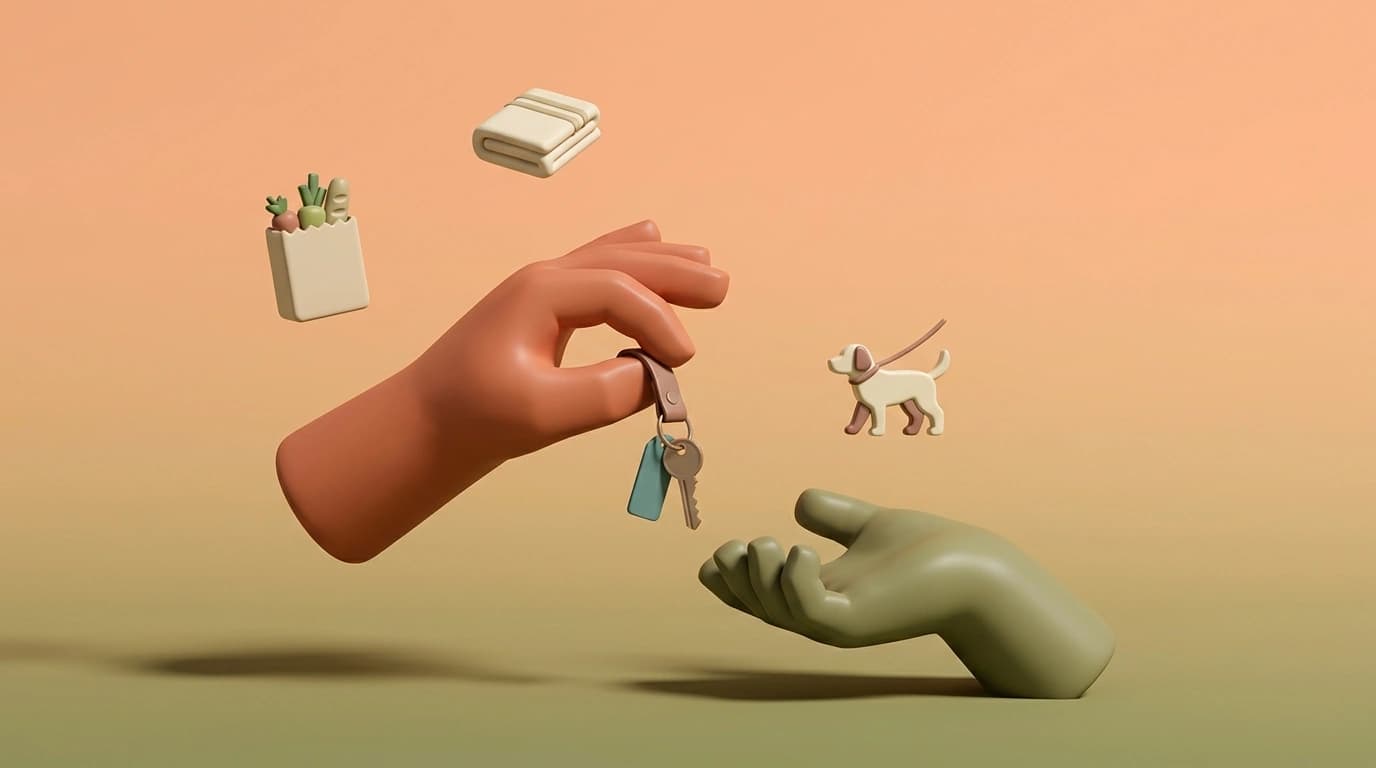
- Make specific, low-friction offers with a date attached. "I'm dropping off dinner Thursday, is 7 okay?" is a yes-or-no question. "How can I help?" is an essay prompt. The first one gets answered.
- Shrink the scope of something without asking. If you're a manager: take a meeting off their calendar and Slack them "I moved this, don't worry about it." If you're a partner: handle the pediatrician appointment and just tell them it's done. Frame it as a decision you already made. Don't ask them to sign off on it.
- Text with no reply expected. A "thinking of you, no need to answer" message once every few days is worth more than a long check-in call once a month. Burnout flattens reciprocity. Don't punish someone for not returning the energy you sent.
- Handle a single logistics thing for 30 days. It could be groceries, or dinner three nights a week, or kid pickups on Tuesdays. Pick one specific recurring task and own it, no negotiation. That's how to help someone going through burnout in a way they'll still be grateful for a year later.
- Stay in for the long tail. Recovery takes months rather than weeks, and the U.S. Surgeon General's 2022 Advisory on health-worker burnout is clear that meaningful improvement depends on the underlying situation actually changing. The first three weeks bring casseroles. Month four is when most helpers have gone back to their own lives. That's how to help someone recover from burnout: be the one still there in month five.
Five well-meaning moves that make it worse
Every one of these came from a person who cared about me. Every one cost me energy I didn't have.
- The pep talk. "You're so strong, you'll bounce back." I don't want to be strong right now. I want to be tired. Please don't compliment the exhaustion out of me.
- The unsolicited book, podcast, or wellness app recommendation. If I had the bandwidth to read a book about my situation, I wouldn't be in my situation. That's how to help a friend with burnout become a friend who is now managing your recommendation on top of everything else.
- The "have you tried" question. Yoga, journaling, cold plunges, cutting caffeine, going for a walk. The person has heard all of these. They're not in a state to run a controlled experiment on their own biochemistry. What they need is one less thing to track.
- The comparison story. "My cousin had burnout and she just took a two-week vacation and came back great." Your cousin was tired for two weeks. That's a different animal than a nine-month occupational fatigue pattern, and pretending they're the same tells the person you haven't understood what they're going through.
- The vague open offer. Kind on your end, useless on theirs. If you catch yourself typing it, delete the last clause and replace it with a specific offer that has a date attached.
The line supporters can't cross — and the one signal that says it's time to nudge toward a professional
The boundary I kept running into: burnout gets better when the job changes, or when the person's relationship to the job changes. That structural change is something no helper can make on someone else's behalf, no matter how loving or well-organized you are.
What you can do is stay warm, stay present, and stay small.
There's one exception where staying small isn't enough. If what you're seeing stops looking like occupational fatigue, if weekends and vacation don't move the mood at all, if the shape of what you're seeing stops matching the burnout profile, that's the moment to say, gently and once, "I think a doctor's visit would be worth it." Say it once, calmly, and don't repeat it every week. Keep bringing the Thursday dinner instead.
The WHO's ICD-11 files burnout as an occupational syndrome, tied to the workplace. When the pattern doesn't fit that frame, the workplace-shaped help isn't the help required. How to help someone with burnout only works when burnout is what they have.
What Alex said, six months later, about the one small thing that mattered
Alex and I got dinner in September, once I was mostly back on my feet. I told him about the Wednesday text and how I hadn't answered it, and he winced a little and said, yeah, he'd figured that one landed wrong.
Then he told me something I hadn't clocked at the time. For about four months, every other Sunday, he'd sent me a photo of his dog with no text. Just the dog. Sometimes I'd send back a heart emoji; sometimes I wouldn't. He'd assumed the whole time that he was being useless.
I told him those photos were, and I mean this literally, the single most useful thing anyone did for me. There was no ask, no plan, no essay prompt, no menu. There was a golden retriever in a patch of afternoon sun and a low, steady signal that somebody was still there and didn't need anything from me.
That's what helping looks like. Send the dog.
— Sam
References
- Maslach, C., & Jackson, S. E. (1981). The measurement of experienced burnout. Journal of Occupational Behavior, 2(2), 99-113.
- Maslach, C. (1982). Burnout: The Cost of Caring. Prentice-Hall.
- World Health Organization. (2019, May 28). Burn-out an "occupational phenomenon": International Classification of Diseases.
- U.S. Department of Health and Human Services, Office of the Surgeon General. (2022). Addressing Health Worker Burnout: The U.S. Surgeon General's Advisory on Building a Thriving Health Workforce. Archived at NCBI Bookshelf: ncbi.nlm.nih.gov/books/NBK595228.