Compassion fatigue vs burnout: what each one is actually measuring
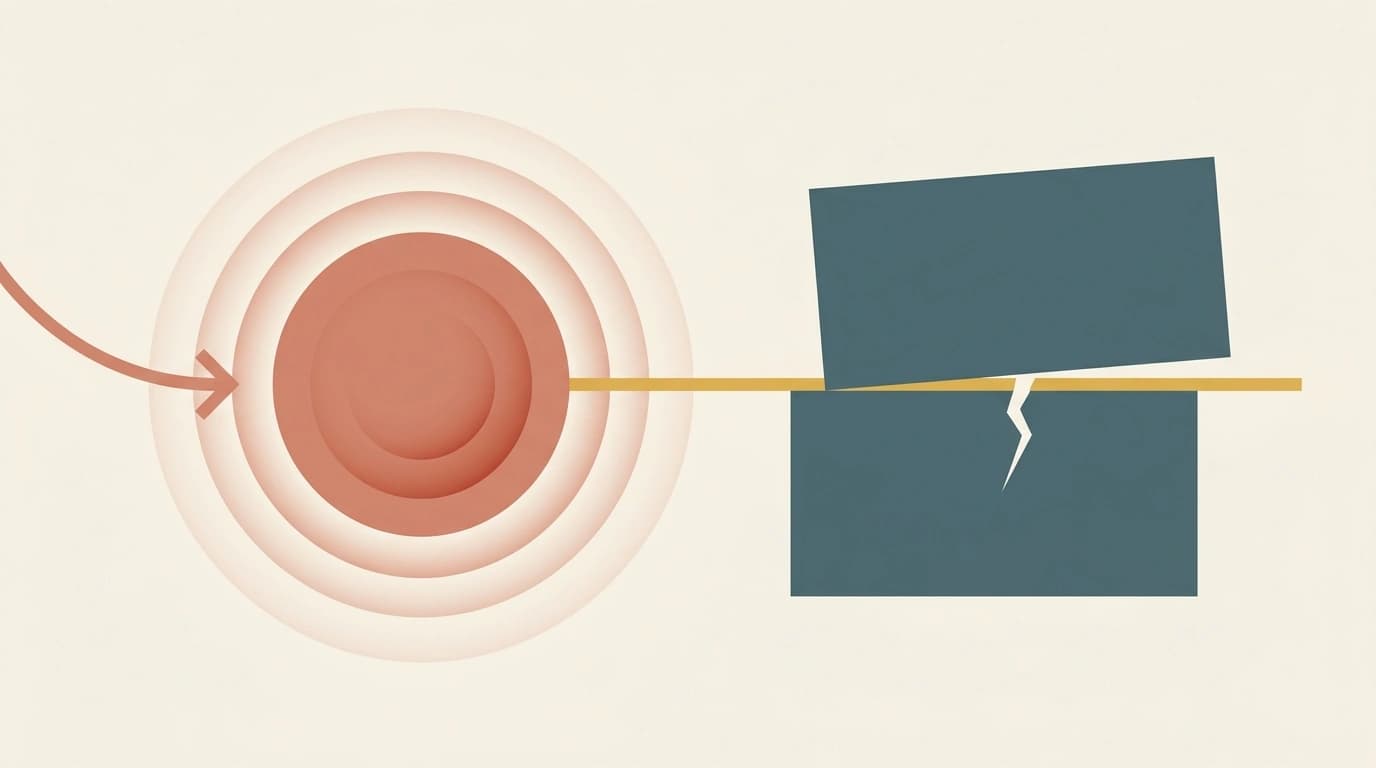
Compassion fatigue and burnout show up in the same office, sometimes in the same person, and the wellness industry often treats them as synonyms. The conflation matters because they are two different injuries carried on two different systems. Mixing them up is how well-meaning ER directors keep buying massage-chair benefits for staff whose real problem is unprocessed trauma from last Thursday's pediatric code.
Two costs, two loads: what each construct is actually measuring
Burnout, in the research, is what happens when the job's demands outrun a person's resources over a sustained stretch. Christina Maslach and Susan Jackson operationalized it in 1981 across three axes: emotional exhaustion, depersonalization (a cynical distancing), and reduced personal accomplishment. The WHO added burnout to ICD-11 in 2019 as an occupational phenomenon, deliberately not as a clinical diagnosis, and used a version of Maslach's three-axis structure.
Compassion fatigue is a different animal. The Wikipedia entry on compassion fatigue traces the term to work by Charles Figley in the early 1990s and characterizes it as "the cost of caring." The compassion fatigue definition clinicians actually use: a traumatic stress reaction from repeated empathic engagement with the suffering of others, in a helping or protecting role. Nurses, therapists, ER doctors, chaplains, social workers, hospice staff, first responders, animal-shelter workers, war-crimes journalists; anyone whose job requires them to sit close to someone else's worst day and stay useful.
So the load is different. Burnout's load is the job structure: workload, control, reward, community, fairness, values. Compassion fatigue's load is trauma exposure filtered through empathy. A person can carry one, the other, both, or neither. The overlap in surface symptoms is why they get conflated, but the mechanism underneath is separate. How is compassion fatigue different from burnout in one line? Burnout tracks with the job. Compassion fatigue tracks with the people the job asks you to sit near.
Three markers that point to compassion fatigue, not burnout
The Professional Quality of Life scale (ProQOL 5), a free 30-item questionnaire used across helping-profession programs, scores three subscales separately: compassion satisfaction, burnout, and secondary traumatic stress (the compassion-fatigue axis). Its existence is instructive on its own. The researchers who built it did not think one number could stand in for the other.
Three symptoms lean compassion-fatigue rather than burnout:
- Intrusive imagery from client or patient encounters. You are loading the dishwasher and the face from Tuesday's intake shows up unbidden. Burnout has a dulling effect on the whole surface of the day. It doesn't reach into ordinary moments with a specific face or scene. A trauma load produces exactly that intrusion.
- A sudden, disproportionate drop in empathy after a specific case. The cynicism curve Maslach describes is slow, spreading over months. This one is fast, showing up in a matter of days, often after a particular exposure. A specific "I cannot feel anything for this patient" that arrives on a Wednesday and stays.
- Physical startle response tied to work reminders. A pager tone, an ambulance siren on your day off, the specific ringtone the triage line uses. Burnout does not produce a fear-conditioning signature. Trauma exposure produces exactly that.
These are compassion fatigue examples in the sense practitioners actually mean the phrase. The phrasing "I am tired of my patients" is closer to depersonalization. Compassion fatigue looks like a specific after-effect of carrying other people's traumatic material.
Three markers that point to burnout, not compassion fatigue
The three-axis Maslach profile has its own signature:
- A months-long slope of exhaustion that weekends stop touching. The drain is steady and non-exposure-triggered, running through the calendar rather than following any specific case.
- Cynicism that generalizes. The tone generalizes across the practice, the system, and the point of the work itself. When people ask what you do, you hear yourself sneer at your own answer.
- A drop in perceived competence even when output is fine. You are still shipping, still charting, still running the shift, and you are convinced none of it is any good. This is Maslach's reduced-personal-accomplishment axis. It doesn't correlate cleanly with actual performance.
This is where the question "is compassion fatigue the same as burnout" resolves in practice: no. Symptoms of compassion fatigue and burnout overlap enough that a self-diagnosis on symptoms alone is unreliable. The underlying loads are separate, and the ProQOL subscales pull them apart on purpose.
The vicarious trauma distinction adds a wrinkle. Vicarious trauma, as McCann and Pearlman named it in 1990, refers to a deeper shift: a change in a helper's fundamental beliefs about safety, trust, or the goodness of the world, from repeated trauma exposure. Compassion fatigue vs vicarious trauma is less a rivalry than a matter of depth. Many clinicians treat vicarious trauma as the cumulative, worldview-altering version of what starts as compassion fatigue. The ProQOL scale collapses them into the secondary-traumatic-stress subscale for measurement, though the phenomenology differs.
Different problem, different lever: why the same fix does not work for both
Because the loads are separate, the interventions are separate, and this is where hospitals and social-service agencies get it wrong most reliably.
Burnout responds to structural change in the job: workload rebalancing, more control, a manager change, a real sabbatical with return conditions. The evidence base runs through the six mismatch domains Maslach and Michael Leiter mapped: workload, control, reward, community, fairness, values. Fix one or two of those and the exhaustion axis starts moving within weeks. A wellness webinar and a subscription to Calm won't move it.
Compassion fatigue responds to trauma-specific interventions. Peer debriefing after a difficult case. Formal supervision with a trauma-trained supervisor. Grounding practices between exposures. Sometimes trauma-focused therapy for the helper themselves. Rest helps at the margin, and every trauma-response protocol includes it. Rest alone leaves the trauma unprocessed, and the load reappears on the next shift.
The mistake most programs make: they buy the burnout intervention (mindfulness apps, resilience training) and hand it to staff whose underlying problem is compassion fatigue. Staff use the app, the fatigue does not move, and the program concludes that the staff are not trying. The wrong lever got pulled. It was pulled in good faith, on a budget that made sense to whoever signed off, and it did nothing for the load the staff were carrying.
The frontline case: when both are running at once, and why treating one leaves the other in place
The catch is that nurses, ER staff, hospice workers, and child-protection caseworkers frequently carry both loads at the same time. The shift is understaffed. The shift is also full of people dying. Maslach's three axes are climbing while Figley's traumatic-stress subscale is climbing, and the two feed each other. Depleted resources make empathic engagement harder to metabolize. Unmetabolized trauma exposure adds to the exhaustion load.
The clinical mistake in dual-load cases: treat only the burnout side (schedule change, reduced caseload) and the compassion-fatigue side keeps compounding in the background. Trauma exposures from previous months do not process themselves. A nurse whose workload finally normalizes but who never got to talk through the pediatric losses from a bad winter will still show ProQOL secondary-traumatic-stress scores in the danger zone six months later.
The reverse pattern: treat only the compassion-fatigue side (debriefing, trauma therapy) and send the person back into a schedule that guarantees the load keeps arriving. The therapy metabolizes what is there. The job keeps depositing more.
The frontline case needs both levers pulled, in the right order, over enough time. That gives administrators a harder problem than the one they budgeted for. For the people carrying the load, it is closer to what the research actually supports. The wider argument on structural burnout recovery, and the six-hour rule that goes with it, sits in the main piece on burnout recovery.
References
- Maslach, C., & Jackson, S. E. (1981). The measurement of experienced burnout. Journal of Occupational Behavior, 2(2), 99-113.
- World Health Organization. (2019, May 28). Burn-out an "occupational phenomenon": International Classification of Diseases. who.int.
- Figley, C. R. (Ed.). (1995). Compassion Fatigue: Coping with Secondary Traumatic Stress Disorder in Those Who Treat the Traumatized. Brunner/Mazel.
- Stamm, B. H. (2010). The Concise ProQOL Manual (2nd ed.). ProQOL.org. See the ProQOL 5 measure.
- McCann, I. L., & Pearlman, L. A. (1990). Vicarious traumatization: A framework for understanding the psychological effects of working with victims. Journal of Traumatic Stress, 3(1), 131-149.
- Maslach, C., & Leiter, M. P. (2016). Understanding the burnout experience: recent research and its implications for psychiatry. World Psychiatry, 15(2), 103-111.