Ikigai in retirement: what Okinawan retirees actually do
What "ikigai in retirement" actually means
Ikigai in retirement is the small daily things that make a morning worth waking into after a career ends. The Japanese term 生き甲斐 (ikigai) was developed in the clinical writing of Mieko Kamiya in 1966 to describe what makes a life feel worth the effort of living it. Her examples are usually unimpressive: a particular person to tend to, a piece of work to return to, a morning ritual that holds the day together. Our main piece on ikigai covers that framework in detail. Okinawan Japanese has no precise equivalent for the English word "retirement" as a hard stop at 65; the local register softens the line between paid work, household labor, neighbor help, and what Westerners call hobbies. And ikigai in retirement is rarely a single thing a person locates — it shows up as a few small things kept going or newly started, usually small in scale.
The Okinawa story has been oversold
The popular framing of Okinawans living longest because they have ikigai is built on data that no longer hold up cleanly. The Okinawa-as-Blue-Zone claim was popularized by Dan Buettner's 2005 National Geographic piece, which profiled Okinawan elders and named ikigai and moai as protective factors. The piece was honest journalism for its time. The picture changed before the book sold its millionth copy.
Okinawan men ranked first among Japan's 47 prefectures for life expectancy in 1985. By 2020 they had dropped to 43rd, per the South China Morning Post's coverage of Japanese government longevity data. Okinawan women slipped from repeated top-rank to 16th. The shift, according to longevity researcher Makoto Suzuki, tracked the arrival of American fast food on the island, the rise of car-dependent travel, and a weakening of the neighborhood ties that older Okinawans had built their long lives around.
The practices the 2005 article documented in 80- and 90-year-olds still appear to have a measurable effect on the people who keep doing them. The diet and environment that surrounded those practices in 1985 has changed, and the younger Okinawan cohorts who grew up on convenience stores are not living as long as their grandparents did. The longevity advantage was real. The word ikigai alone did not produce it.
What Okinawan retirees actually do at 80
Three practices show up repeatedly in the ethnographic record of older Okinawans and remain useful as imitable models for retirees anywhere.
Yuimaaru (結まーる, sometimes spelled yuimaru) is a system of reciprocal neighbor labor. A household needs a roof repaired, a field weeded, a relative cared for during a hospital stay; a small group of neighbors arrives, does the work, and the favor is repaid in kind across the months that follow. Yuimaaru sits in a category Americans rarely name: a ledger of mutual obligation that continues past age 70 and gives older people specific, scheduled, embodied work to do for specific people.
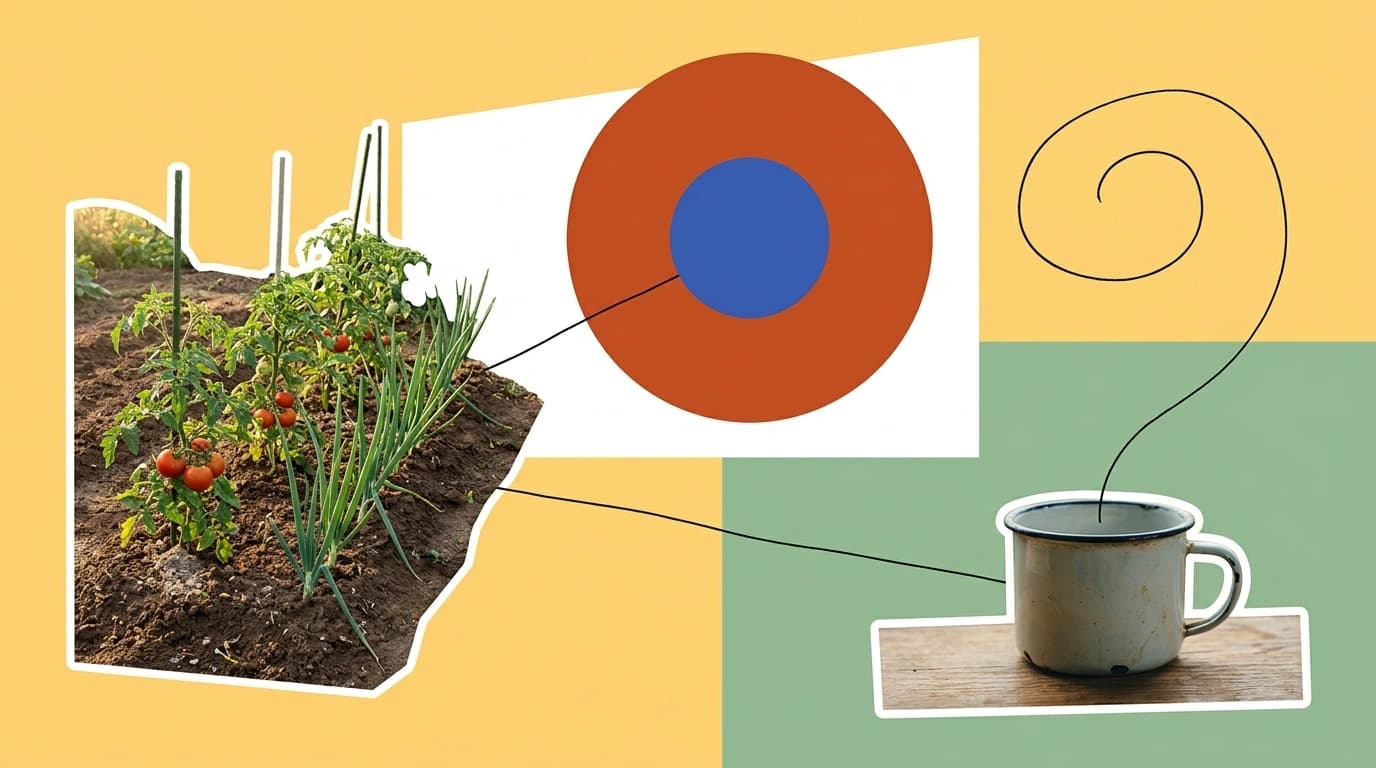
Small-plot vegetable gardening functions as daily labor rather than as a hobby. The garden is small enough to walk to in slippers and large enough that the day has unmissable tasks: water in the morning, harvest before sun, weed in the cool of evening. The structure matters. A retiree's calendar that contains scheduled physical work for living plants is harder to drift out of than one filled with optional leisure.
Moai (模合) are small lifelong social-savings circles whose members began meeting in childhood or early adulthood and continue to meet weekly into their 80s and 90s. Each member contributes a small amount of money; the pooled fund rotates monthly to one member who can use it for a household need. The financial mechanism is the smaller half. The larger half is that the same eight to twelve people are expected at the same table every week for sixty years, and the absence of any one of them is noticed.
Three sizes of purpose that survive past your last paycheck
A retiree-specific reframe sorts purpose by scale rather than by domain.
The morning thing. One small ritual that makes the day start. A walk before breakfast. A first hour at a particular table with coffee and a particular book. The garden. Whatever it is, it is the same thing most mornings, and it does not depend on anyone else's schedule. The morning thing is what stops a retired week from blurring into a single long Sunday.
The person. At least one human a retiree is needed by, or who needs them. A grandchild whose pickup days are fixed. A neighbor in declining health whose Wednesday afternoon belongs to that visit. A grown child who calls every Sunday at six. The category survives because being needed by a specific named person is structurally different from being useful in general.
The long arc. Something a retiree is still building or learning past age 70 that began decades earlier. The cello picked up at 19, dropped at 30, picked back up at 64. A garden expanded across forty years. A genealogical project that has been on the kitchen table since 2008. The long arc does not require the project be finished in any lifetime; the practice is the continuation itself.
The first week after the last paycheck
A practical sequence for the first seven days after a career ends, with one small move per day:
- Day 1. Name the morning thing. Decide what specifically will happen in the first hour after waking, every day.
- Day 2. Call the person. The grandchild, the sibling, the friend from a long-ago job whose number is still in the phone.
- Day 3. List three things still worth learning at 70 that began decades ago.
- Day 4. Walk the route. Whatever the daily walk will be, walk it once, end to end, slowly.
- Day 5. Pick one fixed weekly appointment that will recur: book club, religious service, garden coop, card group.
- Day 6. Refuse to fill the calendar. Leave at least three afternoons of week one entirely empty.
- Day 7. Sit through the boredom that arrives in those empty hours and do not flinch from it.
Ikigai in retirement does not fill an empty calendar. It makes a small calendar feel sufficient. The boredom most retirees fear in the first weeks comes from somewhere else: the residue of forty years spent outsourcing meaning to a job. It takes about a year to clear. Most of the first retired year goes to clearing it.
References
- Buettner, D. (2005). The Secrets of Long Life. National Geographic. Archival profile.
- Lendon, B. Japan's Okinawa loses longevity crown as slow living makes way for faster, shorter future. South China Morning Post. Article.