Burnout vs boreout: how to tell which fatigue you actually have
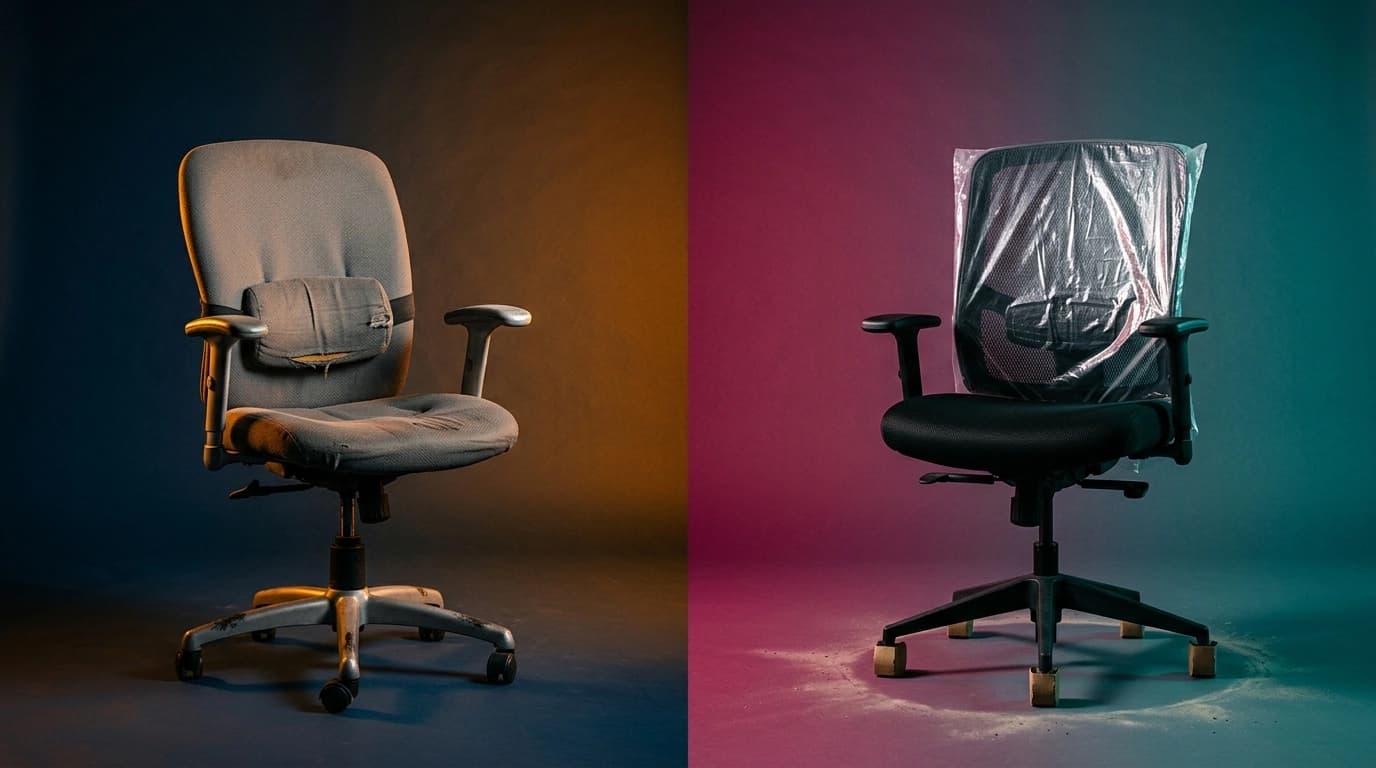
Burnout comes from too much demand. Boreout comes from too little meaningful demand. Both wreck your Wednesday afternoon, both make sleep feel useless, and both send people searching the same set of questions. The fixes go in opposite directions.
| Burnout | Boreout | |
|---|---|---|
| What causes it | Demand exceeds capacity | Demand starves capacity |
| What it feels like at 4pm Wednesday | Calls feel heavier than they are | Calls feel hollow, even short ones |
| What sleep does to it | Helps a little, never enough | Doesn't touch it |
| What more scope does to it | Makes it worse | Makes it better |
| What the WHO calls it | ICD-11 QD85, occupational syndrome | Not in ICD-11 |
Swiss business consultants Peter Werder and Philippe Rothlin named the second pattern in their 2007 book Diagnose Boreout.
Where boreout actually shows up
Boreout is structural. It shows up in places where the gap between someone's capacity and their actual role keeps widening.
Over-qualified hires kept in scope-protected roles their compensation locks them into. Knowledge workers two years past the last real stretch project. Senior individual contributors at companies that restructured around managers, who watch decisions get made in rooms they no longer enter. Operational roles where the rhythm got automated but the headcount didn't, leaving people running checks no one reads. Most readers will recognize at least one.
The WHO classifies burnout as an occupational syndrome under ICD-11 code QD85. Boreout isn't in ICD-11. That absence is part of the diagnostic problem. Doctors and HR systems have a category for the first one and no category for the second. People notice what they have a name for, and miss what they don't.
For the broader frame on burnout as an occupational syndrome, see our main piece on burnout recovery.
Same fatigue, opposite fix
This is where misreading costs the most. The standard burnout playbook (rest, subtract demand, set boundaries, take a sabbatical) pushes a bored person further in the wrong direction. Boreout responds to the opposite kind of intervention: add stretch, raise the stakes, take on something where failure is actually possible.
Someone who comes here from an "am I burned out" search but is actually bored will spend six months making the wrong moves and wonder why they came back from two weeks off somehow more depleted. That's one of the cleaner boreout signals. A real break didn't help, and may have made things worse. The driver is absence of meaning, so taking demand away from someone who already has too little just makes the underload louder.
A behavioural sort you can run this week
The sort takes a minute. When someone offers you scope at work (a harder client, a project outside your lane, a real stretch), does your gut go quieter or louder?
Burnout-quieter sounds like "I can't" and "not now," a dull dread that has nothing to do with the project itself, just the prospect of more.
Boreout-louder sounds like "finally," a real flicker of interest, even nervous interest. The body recognizes something it's been missing.
If neither lights up, if your gut is flat both ways, the picture is mixed and the sort hasn't sorted you. Try again with a different offer. The clearer signal usually shows up with offers that feel adjacent to your current scope but a real stretch, not so far afield that the body reads them as alien.
Why boreout gets missed
Burnout reads as a credential, the fatigue of someone who cared too much and gave too much. Boreout reads as a confession. You weren't asked to do work that mattered, or you were asked and didn't push for more. That second framing is harder to say out loud.
Most people who search "am I burned out" never search "am I bored at work." That asymmetry is part of why boreout gets missed for years. Burnout shows up in HR conversations, in doctor's visits, in management books. Boreout doesn't. People keep the question to themselves and stay in the wrong loop. The reader who ran the sort above and got the boreout answer is already past the hardest part: calling it what it is.
References
- World Health Organization. "Burn-out an 'occupational phenomenon': International Classification of Diseases" (2019). https://www.who.int/news/item/28-05-2019-burn-out-an-occupational-phenomenon-international-classification-of-diseases
- Rothlin, Philippe, and Peter Werder. Diagnose Boreout. Heidelberg: Redline Wirtschaft, 2007.