Is My Job Toxic? A Behavior-Based Checklist Instead of a Feeling
What I missed at the place I wouldn't have called toxic
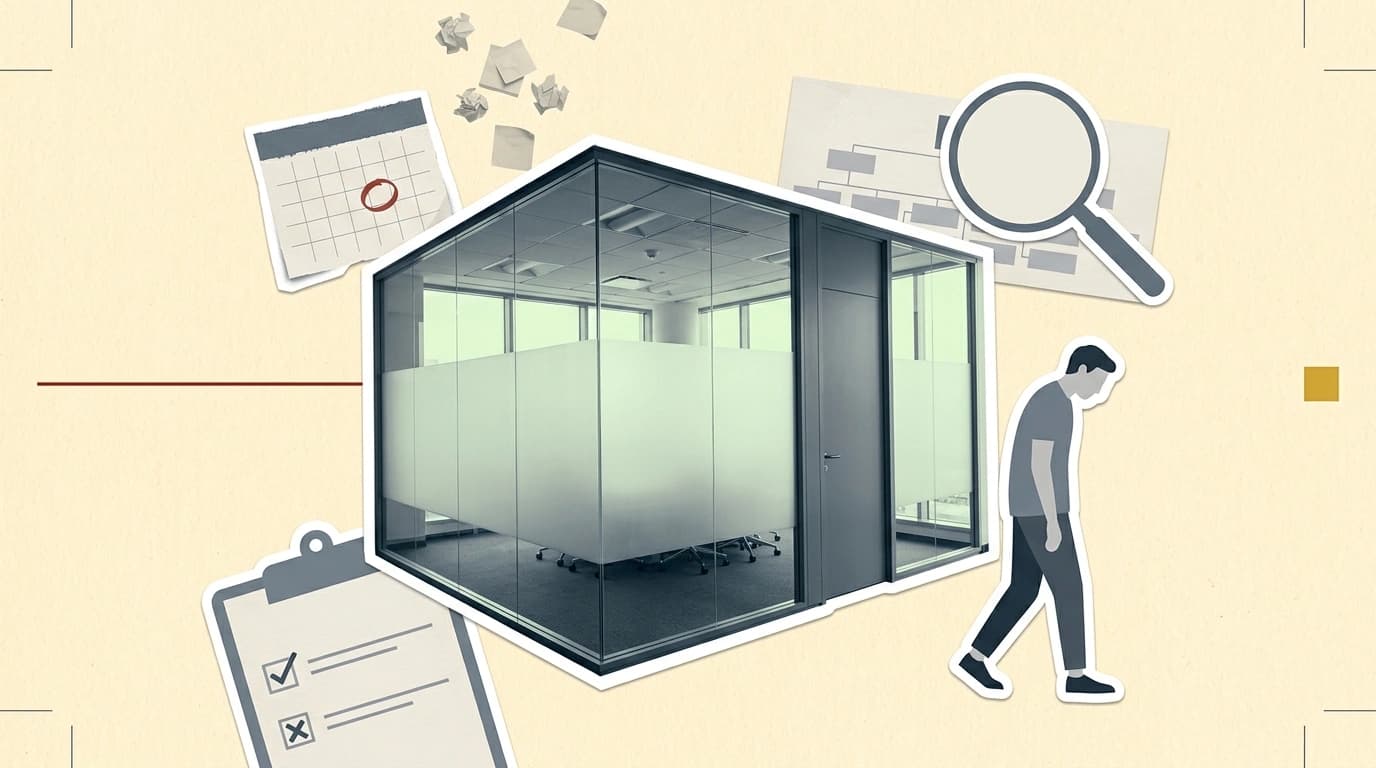
I'll admit it took me a long time to use the word about my old company. The morning I finally did, we were in the glass conference room (the one everyone in the office could see into) and Priya had asked the COO a question about a number in our quarterly deck. A normal question, about whether revenue from a particular client segment had been measured against the agreed methodology or a newer one.
The COO answered her by saying, in front of eleven of us, that she should "stay in her lane." Then he kept talking past her for the rest of the hour. Two weeks later she was on a performance plan. The official reason was something else.
That was the day I learned: "is my job toxic" answers differently from outside your mood than from inside it. A toxic job is a behavioral pattern a workplace produces toward specific people doing specific things, watchable by any clear-eyed visitor. I'd been at that company for three years and watched a half-dozen versions of Priya's exchange, and I'd explained every one away. The COO is under pressure, Priya picked the wrong moment, the deck wasn't the place, everyone's tired. The question to ask was about the place itself: what does it do, every week, to people who do specific normal things?
Toxic vs. just bad: the distinction that changes the move
A bad job is a mismatch. Could be the role, the manager, or the stage of life you're in; the diagnostic that our main piece on what's actually going on when you hate your job walks through in detail. The right move is usually an internal one: transfer, manager change, lateral. The place is fine for someone else; the fit is the broken part for you.
A toxic environment sits structurally apart. What is a toxic job environment, in plain terms? It's a place where speaking up gets you punished and staying quiet keeps you safe. The rules about feedback, deadlines, and credit shift depending on who's asking. The org chart and the actual power map differ, and naming that out loud is career-risky.
That difference changes the move. A bad job rewards a diagnostic. A toxic environment punishes one. If you sit down with your manager at a toxic place and say "I'm working on figuring out whether the role is a fit for me," you've just told someone who treats candor as weakness that you're not loyal. So you swap the question. Instead of asking how this makes you feel, ask what this place does to people who do X. That part you can watch.
A 10-item checklist for spotting toxic job signs
What makes a job toxic is a set of repeatable behaviors, and a clear-eyed visitor would see these toxic job signs in two weeks if they paid attention. Use this as your toxic workplace checklist. (1) Direct questions get treated as insubordination, like Priya's exchange above. (2) The rules shift based on who's asking. The same vacation request gets approved for one person and denied for another, and the difference correlates with proximity to the boss. (3) People who leave get re-narrated as failures or traitors within a month of leaving, in conversations they're not in. (4) Meeting time runs over as the norm. Monday's 10am starts at 10:18, ends on top of the 11:00, and the calendar becomes a fiction. (5) There's no functional channel for raising concerns. HR leaks, the anonymous survey is identifiable, the open-door policy has consequences. (6) Health visibly declines across the team. Sleep, weight, skin, and stress markers move together for multiple people across the same quarter. (7) Tenure runs short. The explanation given is always the person who left, never the place. (8) Information moves by gossip channel rather than by structure, so what you formally need to know reaches you a week late. (9) The org chart and the actual power map differ; the person with the formal title and the person who actually decides are often different people. (10) People who do leave bloom inside 90 days at the next place; that recovery is fast enough to be diagnostic in itself.
Those are toxic workplace examples in the wild. A notebook and a quarter is the diagnostic kit.
A piece of corroboration worth knowing: when MIT Sloan Management Review analyzed toxic culture as a predictor of attrition in 2022, they found that toxic corporate culture predicted turnover ten times more strongly than compensation did. People were leaving because they watched the behaviors. The study gave them the receipt.
The "is it me?" calibration test
Most people read a toxic place as "I'm not cut out for this" for months before they can see it clearly. The first instinct is to look inward, and a toxic environment trains that instinct into a daily habit. Three calibration moves to swap that habit for evidence.
First, ask three former colleagues (the current ones cannot tell you the truth, even if they want to) what they observed during their time there. Specific observations, dated if they can remember. Compare what they tell you against your own checklist.
Second, look at what visibly broke down for other people during the same window. Turnover by quarter is in someone's spreadsheet. Sick leave patterns are too. Anonymous engagement-survey comments, where you can access them, often repeat themes you assumed were yours alone.
Third, if you've recently left an objectively good job and found something to complain about within the first six weeks at the new one, the variable might be you. Or burnout; for that lens, see how to tell whether you hate the job or are burned out. Burnout colors every read, so calibrating against it matters before you decide the new place is the source. For a parallel diagnostic from the role-fit side, signs you should quit your job runs the same question from a different angle.
The Maslach Burnout Inventory is useful as a backstop. Burnout has exhaustion, depersonalization, and reduced-efficacy axes that travel with you across jobs, which is why the WHO classifies it as an occupational phenomenon rather than a personal condition. A toxic environment produces a sharper, situational version of the same symptoms, and they tend to lift fast once you are physically away, usually within weeks of starting somewhere else.
Three forks, and what to do when your job is toxic
If the checklist read confirms a toxic environment, you have three live moves.
The first is stay and document privately. If leaving carries retaliation risk (small industries, NDAs, contested commission claims), build a paper trail before you exit. Email summaries of verbal feedback back to your personal gmail. Save dated screenshots. Keep a date-stamped log of incidents. The labor lawyer you may or may not eventually call will ask for those.
The second is leave fast. The threshold is safety of self: physical, mental, or legal exposure that no paycheck can compensate. If a regulator could call you next quarter and your name is on something, the runway math does not apply. Get out.
The third is leave slow with runway in place. The main hate-my-job piece above covers the math in detail; the short version is twelve months of expenses in cash before you can pick the next role on fit rather than urgency. Build the runway, run the checklist again quarterly to confirm the read is stable, and exit when the math allows.
Most people who eventually call a place toxic, after months or years of explaining it away, look back and realize the first observable sign showed up in week one or two. The practice worth keeping is to write down what you notice in your first month at any new workplace, and check that list at month six. I stayed at my old place almost three years past the point at which Priya's exchange should have been enough, and the reason I stayed was the same reason everyone there stayed: I was good at explaining things away. The notebook would have caught it in week one if I'd kept one.
References
- Sull, Donald, Charles Sull, and Ben Zweig. "Toxic Culture Is Driving the Great Resignation." MIT Sloan Management Review, 11 January 2022. Source for the finding that toxic culture predicts attrition roughly ten times more strongly than compensation.
- World Health Organization. "Burn-out an 'occupational phenomenon': International Classification of Diseases." 28 May 2019. ICD-11 code QD85 framing burnout as occupational rather than personal, used here for the burnout-vs-toxic-environment distinction.