Returning to work after burnout timeline: a four-week phased return
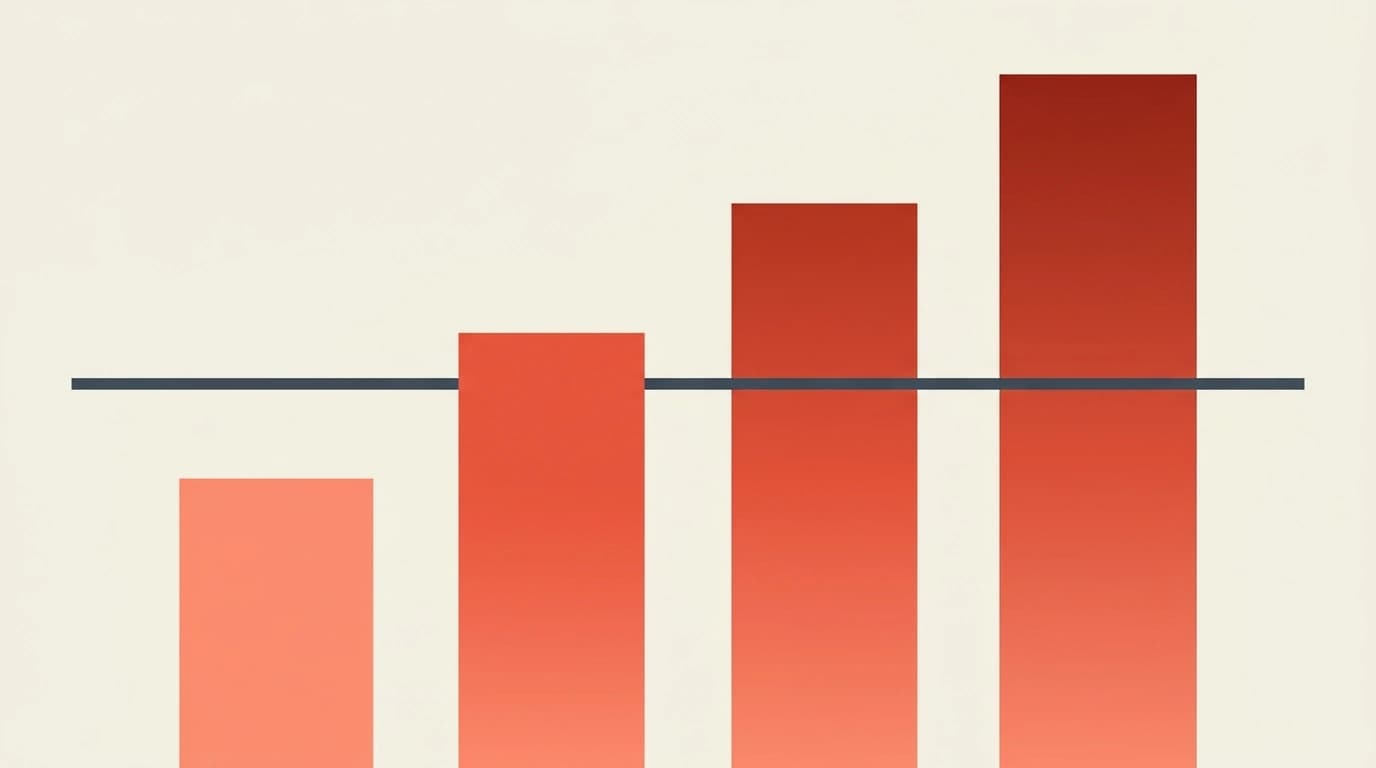
A sensible returning to work after burnout timeline is four weeks of phased return at roughly 50, 60, 75, and 90 percent of normal capacity, on top of a recovery that has already stabilized before day one. The question most people search ("how long before going back to work after burnout") has two parts. The ramp is only the second one. The first part is whether the structural change that produced the burnout has actually happened. A ramp back into the same role, scope, or manager is a slower route to the same breakdown.
Christina Maslach's three-axis model (exhaustion, cynicism, inefficacy) stays the clinical anchor through return. The WHO's 2019 ICD-11 classification treats burnout as occupational, so what's being evaluated at return is the structural fit of the job more than any single symptom score. (The underlying recovery is the subject of our burnout recovery piece.)
The four-week ramp at 50, 60, 75, 90 percent: what each week looks like on a real calendar
The phased return after burnout runs cleanest when the four weeks are drawn on an actual calendar before day one. A workable burnout return to work schedule:
- Week 1, 50% capacity. Half-days or three full days. No deliverables with a hard same-week deadline. One recurring meeting removed from the calendar. Lunch is a real break, outside the building if the job allows.
- Week 2, 60% capacity. Four days or extended half-days. One deliverable with a one-week horizon, scoped by the manager before Monday. No cross-functional meetings that require advance prep.
- Week 3, 75% capacity. Four and a half days, or full days with one protected block. One deliverable owned end-to-end. First deep-focus session of 60 minutes mid-week.
- Week 4, 90% capacity. Full standard week minus one scheduled recovery afternoon. Normal meeting load. New project ownership still deferred to week five.
Full capacity happens in week five at the earliest. The ramp is asymmetric: weeks one and two do roughly the same recovery work as weeks three and four combined. Compressing the first two weeks is where returns most often fail.
The four rules that stay on across every week
Independent of the capacity number, four constraints apply from week one through week four of back to work after burnout leave:
- No on-call rotation. Pager duty, after-hours production alerts, overnight escalations, all deferred to week five. On-call interrupts sleep architecture, the single most sensitive recovery signal.
- No travel. Business travel compresses sleep, meal timing, and recovery routines inside one week. One canceled trip is cheaper than one restart of leave.
- No new project ownership. Running an existing project at reduced capacity is a different task from taking on a new one. The novelty tax is heavy during the ramp.
- One weekly manager checkpoint. A standing 20-minute meeting on the same day each week. An "open-door whenever" setup does not do the work. The point is a predictable surface for scope renegotiation, before Thursday afternoon becomes Friday morning.
These four survive even if a specific week's capacity target gets missed. They are the floor.
What to protect from the leave period: the practices most people drop the day the badge scans back in
The clinical research summarized in the U.S. Surgeon General's 2022 Advisory names what tends to erode first after return: sleep timing, physical activity, and non-work social contact. These are also the three practices most people drop within ten business days of coming back.
What to protect:
- Sleep window. Same bedtime and wake time Monday through Thursday. The window is more protective than total hours.
- One concrete low-stakes activity outside work. Six hours a week of in-person, routine, hands-on work: a volunteer shift, a hardware store, a bakery. This pattern carries over from recovery and should stay on through week one back.
- One non-work weekly social anchor. A standing coffee, a Sunday walk, a weekly phone call. One recurring contact is enough; three is a bonus.
- A written refusal line. Pre-decide, in writing, what request will trigger an immediate re-escalation to the manager. Vague mental lines rarely survive a Tuesday at 4 p.m.
A burnout recovery timeline before returning to work that leaves out a protection plan for the first thirty days back often reads, in retrospect, as a longer recovery with a shorter remission.
Three tripwires that mean the ramp has to extend
Treat the ramp as a hypothesis. Three signals mean it needs to extend by one to two weeks, regardless of what the calendar says:
- Sleep quality regresses. Two or more nights of broken sleep or sub-six-hour nights in week two or three. Sleep is the earliest instrument; it moves before mood does.
- Irritability returns to week-two levels. The people around the house, whether partner, housemate, or close friend, are usually a more reliable sensor than self-report here. If they flag the tone shift, treat it as data.
- Deep-focus capacity has not recovered to a 60-minute block by week three. This means a deliberate 60-minute block, timer on, one task. "I was busy" does not count. Repeated failure here means the cynicism axis still carries weight at week-four load.
Any one of the three is a reason to extend. Two is a reason to extend by two weeks and schedule a recovery review with the clinician or coach who signed off the stress leave return to work timeline in the first place.
The three-line conversation for extending the ramp — why it was built for the week it breaks
Managers rarely know what a phased return after burnout should look like at a procedural level. When a tripwire has fired, the conversation for extending is three sentences:
- "I'm extending the ramp by [one / two] weeks because [sleep / irritability / focus] regressed last week."
- "The capacity target for week [N] is now [X]%. The four rules stay on."
- "The next check-in is [day/time]. Please hold [specific deliverable or meeting] until then."
The conversation leaves out three things: an apology, a volunteer "I can make up the hours later," and any open-ended "when I feel better." The ramp was designed with extension built in. A week-three regression means the ramp is doing the job it was built to do. The week that reveals the problem is the week the ramp exists for.
A returning to work after burnout timeline that never has to extend was already slow enough. One extension is the ramp working as designed. Three extensions is a signal to revisit whether the structural change discussed in burnout recovery actually happened, or whether the role returned to is the role that produced the burnout.
References
- World Health Organization. (2019, May 28). Burn-out an "occupational phenomenon": International Classification of Diseases. who.int.
- U.S. Department of Health and Human Services, Office of the Surgeon General. (2022, May 23). Addressing Health Worker Burnout: The U.S. Surgeon General's Advisory on Building a Thriving Health Workforce. Archived at NCBI Bookshelf: ncbi.nlm.nih.gov/books/NBK595228.