How to scope a misogi to your actual fitness baseline
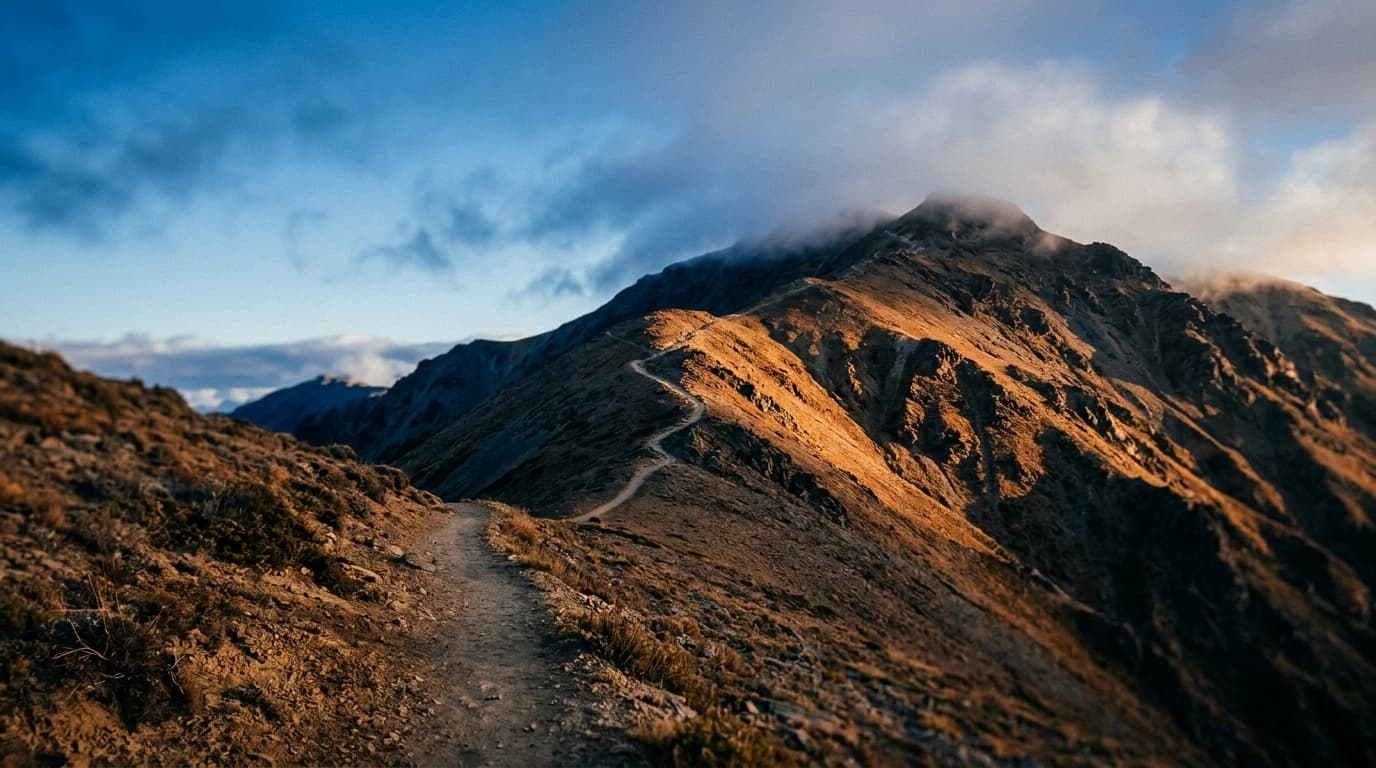
The misogi 50 percent rule has a calibration problem the people repeating it rarely mention: the same event is a reasonable challenge for one body and a fatal one for another, and the only thing that tells you which is your own baseline. Three candidates that sound equally epic at a dinner party — a 50K trail run, a 100-mile gravel ride, a solo English Channel swim — can come out, for the same person, as two sane stretches and one survival problem, depending on four numbers most people never write down.
Get those four numbers wrong and the event you pick to test yourself becomes the event that hospitalizes you.
The number that decides what counts as hard for you
The 50 percent rule is a load-logic claim, not a feeling. It works against numbers. Feelings are unreliable here, because the events that read as appropriately scary in the cultural imagination are calibrated against a fit, well-trained general athlete, not against your current weekly mileage and recovery rate.
Most people pick a candidate event by reading about it in a profile of someone who completed it, deciding it sounds about right, and then reasoning from the description. That places the candidate near the middle of what the internet considers a respectable misogi. The 50/50 band for your particular body sits somewhere else entirely, and the gap between those two locations is where people get injured, hospitalized, or worse.
The four baseline numbers to write down before you pick
You need four numbers, written on the same page, before any candidate event qualifies for evaluation.
- Endurance ceiling. Your single longest sustained effort in the last 24 months, measured in the unit the candidate event uses (kilometers run, kilometers cycled, kilometers swum in open water).
- Weekly training capacity. Honest average hours across the last three months. Not your peak week. Not your aspirational schedule.
- Technical floor. Highest grade or skill level currently solid. If you climbed 5.10a eight years ago but have not roped up since, your honest current floor is unknown, which is itself the number. Treat unknown as zero until tested.
- Recovery window. How many days after your hardest current session before you are training normally again.
Most people, asked these four, write down a slightly better athlete than the one who exists: the half-marathon time from 2022, the weekly volume from before the kids, the four-lifts-a-week winter that ended last March. That number is not your baseline. Your baseline is the actual recent average. Write the real one.
The 50/50 test against YOUR baseline, not the internet's
A candidate event sits in the misogi band when, against your written baseline, it meets one of three conditions. The duration is 1.8 to 2.5 times your endurance ceiling. The technical level is one grade above your current solid grade. The total demand compresses your recovery window to roughly half its normal length.
Take a concrete baseline and run the three dinner-party candidates through it. Say your honest numbers come out as a 25 km running ceiling, 80 km cycling, no open-water swim past 1 km, about 4.5 training hours a week, and recovery around 48 hours after a long run.
50K trail run. Fifty kilometers against a 25 km ceiling is a 2.0x ratio, sitting cleanly inside the band. Train consistently across four months, run a 30K easy somewhere in the build, and the candidate becomes a defensible misogi by September. Plausible.
100-mile gravel ride. One hundred sixty kilometers against an 80 km ceiling is a 2.0x ratio, also inside the band. Easier to scale toward than the 50K, because cycling stress decouples from running mileage and you can build cycling volume without compromising your run base. Also plausible.
English Channel solo. The English Channel crossing is roughly 34 km of open water; against a 1 km ceiling that is a 34x ratio. This is not in the band. It is past the band by an order of magnitude. The Channel is not a misogi for this baseline; it is a survival problem dressed up as one. An honest open-water misogi here would be a 3 to 4 km lake crossing with safety kayaks, at roughly 3 to 4x the ceiling. That is a stretch and possibly past the band, but recoverable from rather than fatal.
The point of the math is not to deflate the ambition. The point is to keep the recalibration intact. An event that produces a hospital admission does not rewrite your sense of what hard means. It rewrites your sense of what stupid means.
The safety floor — non-negotiable preconditions before any candidate qualifies
The 50/50 rule describes completion probability. There is a separate floor for survival probability that is not adjustable. The second rule of the misogi — the "don't die" rule — covers this. The practical content is category-specific.
Cold water. Qualified safety personnel in the water with you, a thermometer in your pre-event protocol, and written abort criteria you signed off on while warm. No solo cold-water attempts.
Altitude. A real acclimatization schedule, not a long weekend. Working knowledge of acute mountain sickness symptoms and the descent rule. A guide if your highest prior altitude is below your event altitude.
Solo wilderness. A check-in protocol with two people, a satellite messenger device, a turn-around time, and the discipline to use it.
Technical climbing. Current instruction from a certified guide service, not a partner's verbal coaching, and a route well within your single-pitch competence rather than at it.
If any one of these is missing for the relevant category, the candidate is not scoped down. It is replaced. You cannot scope down a Channel swim by attempting half of it, because you cannot half-cross open water. You pick a different event.
What you do when the math says your honest misogi is boring
The hard part of doing this calculation properly is that the answer is often unimpressive. For the baseline above, the honestly scoped candidate is not the Channel or the 100-miler. It is something like a 35K trail run in early September with 1,500 meters of elevation, on terrain you have not trained on. It will not produce a story that competes with a Channel attempt at a dinner party. It is the correct event for that body this year.
The instinct to inflate the number, to want the 100-mile or the Channel solo or the Himalayan peak, is mostly an audience instinct. It is the part of you that has not yet absorbed the no-talking rule. A person who needs the impressive version of the event in order to feel that the practice counts is solving for an audience that the practice forbids them from having.
A 35K trail run that you might not finish is a misogi. A 100-mile event that you finish because you trained for it across six months exactly as you would have trained for any race is a project. The first moves your floor. The second improves your fitness. These are different goals. The event that produces recalibration is almost always smaller than your first guess.
So run the four numbers honestly and let them pick the event, even when the honest answer is the unimpressive one. That is the version of the practice that actually moves your floor by September.
References
- Easter, M. What's Your Misogi? Two Percent. The two misogi rules (a 50/50 chance of finishing; "don't die"), credited to Marcus Elliott: twopct.com.
- Channel Swimming Association. FAQ — the English Channel crossing is approximately 21 miles (32–34 km): channelswimmingassociation.com.
- U.S. Centers for Disease Control and Prevention. High Elevation Travel & Altitude Illness, CDC Yellow Book 2024 — acute mountain sickness and the descent rule: wwwnc.cdc.gov.