How Often Should You Do a Misogi? The Once-a-Year Rule
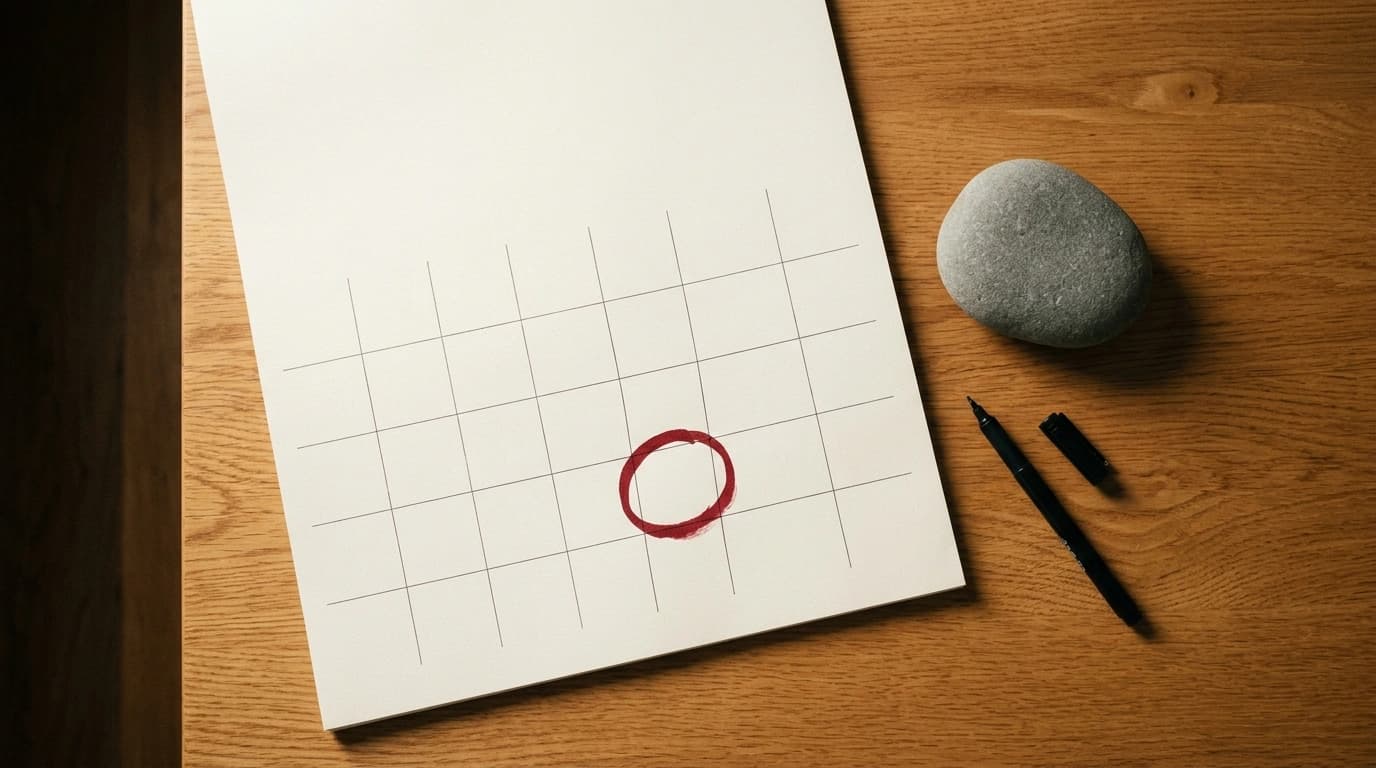
The canonical answer is once per year. Jesse Itzler and Marcus Elliott, who introduced the American reading of misogi as a once-a-year challenge, are explicit about the annual cadence. Two in a year is defensible in narrow cases. Three or more turns the practice into a personal-challenge tour and erodes what makes it useful. The rarity is the load-bearing feature.
Once per year, on purpose — the default and why it holds
The canonical misogi frequency is one event per calendar year. This is the default position across every serious source on the modern American practice. Michael Easter's The Comfort Crisis (2021) treats the annual cadence as constitutive, and Jesse Itzler has been emphatic on the same point across his podcast appearances since the mid-2010s. The reasoning is structural. The psychological recalibration a misogi produces comes from its rarity. An event large enough to reshape a practitioner's internal sense of what counts as hard has to stay rare enough that the memory keeps working as a reference scale. A year is roughly the interval at which the reference memory begins to fade and the next event becomes useful. Anything more frequent starts to resemble ordinary training adaptation. Training adaptation is a legitimate practice, and it addresses different goals than what misogi is designed to do.
When twice a year is defensible (and when it's just ambition wearing a Japanese word)
The question "can you do more than one misogi a year" has a defensible answer in a narrow set of cases. The clearest one is an early failure. If the spring attempt did not really occur in any load-relevant sense (a DNF at kilometre three of a fifty-kilometre run, an illness the day before the start), setting a second attempt later that same calendar reads more as a rescheduled first attempt than a second misogi. The other defensible case is participation in an actual Shinto misogi at a shrine like Tsubaki Grand Shrine in Mie Prefecture, where the ritual sits on its own religious calendar and belongs to a different tradition entirely. That is a separate practice with separate logic. The common undefensible version is the practitioner who completed a spring event and simply feels ready for another. Doing misogi twice a year in that pattern is closer to endurance-sport culture using a Japanese word.
When zero is the right answer this year
Some years the answer to "how many misogis per year" is none. Illness, injury, a caregiving obligation, a job loss with real financial stakes, or a bereavement will reasonably crowd the practice out for twelve months. Skipping is a legitimate reading of the year. The principle is simple: the year to skip a large voluntary stress event is the year that has already imposed one. The recalibration effect requires entering the event from a stable baseline. Enter from a shattered baseline and the event mostly compounds the damage. The right cadence in a hard year is zero.
The rolling-stunts anti-pattern: how a misogi practice quietly becomes a bucket list
Serious practitioners watch for one particular failure mode: the four-event year. A cadence that stacks a Channel swim in April, a fifty-mile trail run in July, a technical climb in September, and a solo canoe trip in October has slipped its own definition. That pattern is a bucket list. Bucket lists operate on different logic than the misogi practice as Itzler and Elliott describe it. The word implies a specific structure: a single bounded event, roughly a year apart from the last one, whose scarcity produces the recalibration effect. Multiply the events and the structure dissolves. What remains is an amateur adventurer with a stack of impressive photographs and, by their own testimony, a diminishing sense that any of the events carry the weight the first one did.
Your cadence tells you what you are actually doing
The answer to how often you should do a misogi is downstream of a prior question: what the practice is for. A practitioner using misogi to recalibrate their sense of what counts as hard needs one event per year, spaced generously, with a real chance of failure. Doing a misogi every year at that cadence, with the occasional year off, is the discipline. A practitioner accumulating a résumé of extreme events is doing something else that borrows the word. Both people can use the label. Only one is likely to get the recalibration effect Elliott and Itzler describe. Misogi cadence is a diagnostic more than a schedule. The pattern that holds is one event a year most years, with the occasional year off entirely. Anything faster is closer to endurance culture with better packaging.
References
- Easter, M. (2021). The Comfort Crisis: Embrace Discomfort to Reclaim Your Wild, Happy, Healthy Self. Rodale Books. Documents Marcus Elliott's misogi framework — the roughly 50 percent failure design and the once-a-year cadence.
- For the full Itzler–Elliott lineage and the modern American reframe, see our main piece on what is misogi.