How to recover after a misogi: the three layers most people miss
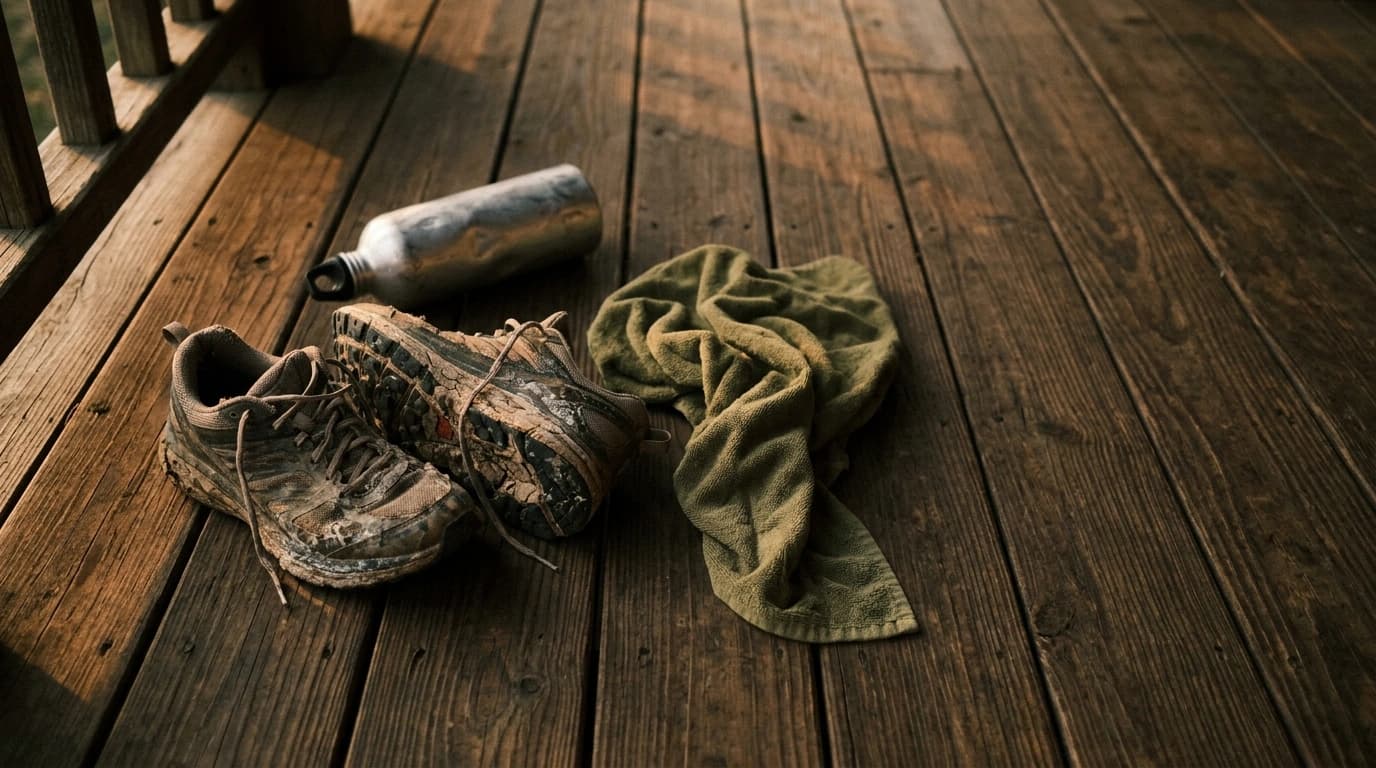
How to recover after a misogi is a three-layer question: physical (days 1 to 14), life-integration (weeks 2 to 4), and psychological (weeks 2 to 8). Most people plan for the first layer and get ambushed by the third. The gap between "the soreness stopped" and actual recovery is where the misogi's whole recalibration effect can slip away.
Recovery has three layers, and most people only plan for the first one
Post-event recovery, in the American misogi literature, gets treated as a single problem with one timeline. It is three problems on three timelines, and the mismatch is where trouble finds people. The physical layer resolves fastest and is easiest to plan for. The life-integration layer, mostly unwritten about, catches people around day four. The psychological layer arrives last and stays longest, and it does not correspond to the calendar most people are watching.
The Shinto tradition of misogi (see our main piece on what misogi is) has an implicit post-ceremony reintegration built into it: the practitioner returns to community, family, and ordinary work, and the ritual is understood as bounded on both ends. The Itzler-Elliott reframe has almost no post-event protocol, which is why building one matters.
Layer 1, the physical (days 1 to 14): sleep debt, muscle soreness peak, and the medical-alert list
Depending on format, the physical picture is well-mapped by sports medicine. For endurance-format misogis, delayed onset muscle soreness peaks between 24 and 72 hours after the event. The first day usually feels better than the second, and the second is usually the worst.
Sleep debt is the second physical problem. A large-format event costs three to six hours of sleep across the preparation and event nights. Adults need seven or more hours nightly under normal conditions, and the sleep-deprivation literature indicates that one or two long recovery nights within the first week bring mood back to baseline. Skimping on those nights is the single most common physical-layer mistake in misogi recovery.
The medical-alert list is the part that matters when it matters and is boring the rest of the time. Persistent tea-colored urine more than 24 hours out is the warning sign for exertional rhabdomyolysis and is a same-day medical concern. Muscle pain that is severe and localized rather than diffuse. Unexplained swelling. Resting heart rate more than 15 beats above baseline after 72 hours. Chest pain or shortness of breath at rest. Any of those, call a physician the same day. The 50-percent-failure rule is meant to apply to whether you finish, not to whether your kidneys do.
Layer 2, the life-integration (weeks 2 to 4): the day-four re-onboarding trap and the calorie shortfall nobody warns about
Around day four, the physical fog clears enough that the calendar starts asserting itself again. The inbox has three hundred unread. Meetings resume. The kids' teacher has been trying to reach someone. This is the day-four re-onboarding trap: energy has not fully returned, executive function is still well below baseline, and the world is pretending yesterday never happened. Day four should be scheduled at day-two intensity, and the calendar should be cleared for another low-load week.
The calorie shortfall is the second underappreciated life-integration issue. Appetite lags exertion by two to five days for many people. The event burned a substantial deficit, and the recovery window undereats to close it because hunger is muted and the body is running on inflammation-driven suppression. The result is a slow-cascade fatigue in weeks two and three that reads as mysterious. The cause is a multi-thousand-calorie debt the body has not yet been given back. This is a routine oversight in what to do after a misogi, and eating deliberately across the two weeks after the event resolves it.
The third piece of the life-integration layer is the re-entry conversation, when the spouse, the co-worker, or the parents ask how it went. The pull is to narrate. Jesse Itzler's no-talking rule is load-bearing here for a specific reason: a short, undramatic sentence carries the recovery week after a big challenge better than a long story does, and it protects the memory from being flattened into a performance.
Layer 3, the post-event psychological dip (weeks 2 to 8): what the marathon-blues research shows, and two mechanisms behind it
The psychological layer is the one that catches people. Endurance-athlete communities have long called it the marathon blues, and the pattern generalizes to any ordeal event with a long anticipatory build-up. Symptoms are low mood, flatness of affect, a sense of purposelessness disproportionate to circumstances, and mild insomnia. Onset is typically two to four weeks after the event; duration is typically four to six weeks. In most cases it resolves on its own within a month or two; if it lasts longer than two months or produces functional impairment, a physician conversation is warranted.
Two mechanisms appear to be at work. The first is goal-vacuum. A large organizing project has been removed from the psychological calendar, and there is now a hole where the training block used to be. The nervous system spent months modelling November 12, sixty kilometers, and the model is obsolete. Building a new organizing target too fast burns out the recalibration effect the misogi produced. Sitting inside the empty space is the harder move and the correct one.
The second is anti-climax mismatch. The Japanese-language Shinto framing builds in the harae-and-return structure, where purification and re-entry into ordinary life are understood as connected phases of one event. The American reframe strips that structure and treats the misogi as an achievement. Achievements produce a summit-feeling, and summits are followed by descent. What happens after you finish a misogi in the American register is that you find yourself at the same desk, in the same job, with the same relationships, and now with a vivid memory of having done something. If nothing in ordinary life has changed to receive the memory, the memory becomes a source of contrast rather than integration.
The four things that reliably make the dip worse, and why day seven is the recovery decision that matters most
Four things worsen the dip. First, treating the misogi as a fix and expecting the marriage, the career, or the drift to have been repaired by the event. The misogi is a specific tool for a specific job and cannot do jobs it was never designed for. Second, filling the goal-vacuum too fast by signing up for the next event within the first month, which trains the nervous system to treat ordeal-scale effort as the new floor and defeats the recalibration point. Third, breaking the no-talking rule, which converts a private memory into a performed one. Fourth, undereating and undersleeping through weeks one and two, which turns a routine dip into a physically amplified one.
Day seven is the leverage point in misogi post-event care. It is far enough out that soreness has resolved and near enough that the psychological layer has yet to peak. Practitioners at day seven either build a light re-entry structure (an easy walk each morning, a short evening reading habit, a scheduled call with the person who did the event) or drift into the calendar and get hit later without scaffolding. The Shinto post-ritual return is deliberately structured. The American version leaves the structure to whoever built the recovery plan. If nobody did, day seven is when to build it.
The point of the ritual, in both framings, is what comes after it. The misogi that produces a durable shift is the misogi that gets recovered from with as much intention as it was completed with.
References
- Delayed onset muscle soreness. Wikipedia. Peak soreness 24 to 72 hours post-exercise; microtrauma mechanism.
- Rhabdomyolysis. Wikipedia. Exertional causes; tea-colored urine as a warning sign.
- Sleep deprivation. Wikipedia. Sleep debt; mood returning to baseline after one to two recovery nights.
- About Sleep and Sleep Disorders. Centers for Disease Control and Prevention. Seven or more hours nightly guidance for adults 18-60.