Misogi with a partner or solo: which one fits your challenge
The question of misogi with a partner or solo is often answered by assertion rather than evidence in the online writing on the practice. Is a misogi supposed to be solo? Both the Shinto original and the American reframe permit partnered attempts. The design question is which shape fits which challenge, and the answer turns on structural features of the attempt.
What the original rules do and don't say about a partner
The Shinto version of misogi (禊) is often performed communally. Pilgrims arrive at active shrines both alone and in pairs and small groups, and public training sessions run with a small group under a lead priest. Our piece on what misogi actually is covers the deeper history. The Wikipedia entry on Shinto misogi practice confirms the same point in one line: "many people take pilgrimages to sacred waterfalls, lakes and rivers, either alone or in small groups, to perform misogi." Nothing in the tradition requires solitude.
The American reframe, popularized by Jesse Itzler and Marcus Elliott and given its widest audience by Michael Easter's The Comfort Crisis, has three rules: roughly fifty percent chance of failure, you can't die, and no external audience. Nothing in the three rules requires a companion, and nothing forbids one. Jesse Itzler's own 29029 Everesting endurance event, which he co-founded in 2017, is designed as a team format. His private annual misogis have historically involved small groups of friends, according to Easter's account.
The question of solo versus partnered misogi turns out to be a design question. The rules on both sides leave the choice open.
The four things a partner changes about the attempt
Introducing a second person into a misogi changes four separable variables.
Safety floor. Two people can turn back for each other. In cold water, at altitude, on remote wilderness routes, and in prolonged endurance events, a companion is often the difference between a hard event and a rescue. This is the strongest reason partnered attempts exist in technical categories.
Accountability structure. A misogi with a friend removes the option of quiet abandonment. A person who was going to run a 50K in the Sierras alone can, in principle, turn around at mile twelve and never mention it again. With a friend along, the abandonment becomes a small negotiation. That negotiation raises the completion rate. It also softens the fifty percent rule the practice depends on, because the design was calibrated against the real probability of quitting.
Shared witness. A partner creates a second person who carries the memory. That is useful for reflection later and for the shared conversation that sometimes becomes a meaningful friendship input on its own. It also dilutes the internal-memory landmark the misogi is meant to install. The private version of the event has a texture the shared version does not reproduce.
Cost of coordination. Two people means coordinating schedules, matching fitness curves, and managing two families around the training block. For skill-based misogis (learning a language in twelve months, certifying as an EMT), coordination is trivial. For technical wilderness attempts, coordination roughly doubles the pre-event workload.
The point of naming these four is that "misogi with a friend" is really four separate decisions bundled together. A partnered attempt trades some recalibration purity for a higher safety floor and a higher completion probability. Whether that trade fits depends on what the attempt actually is.
When two people are the safer design: three misogi shapes that need a rope team
Three categories of attempt sit in a band where a solo attempt is the wrong design.
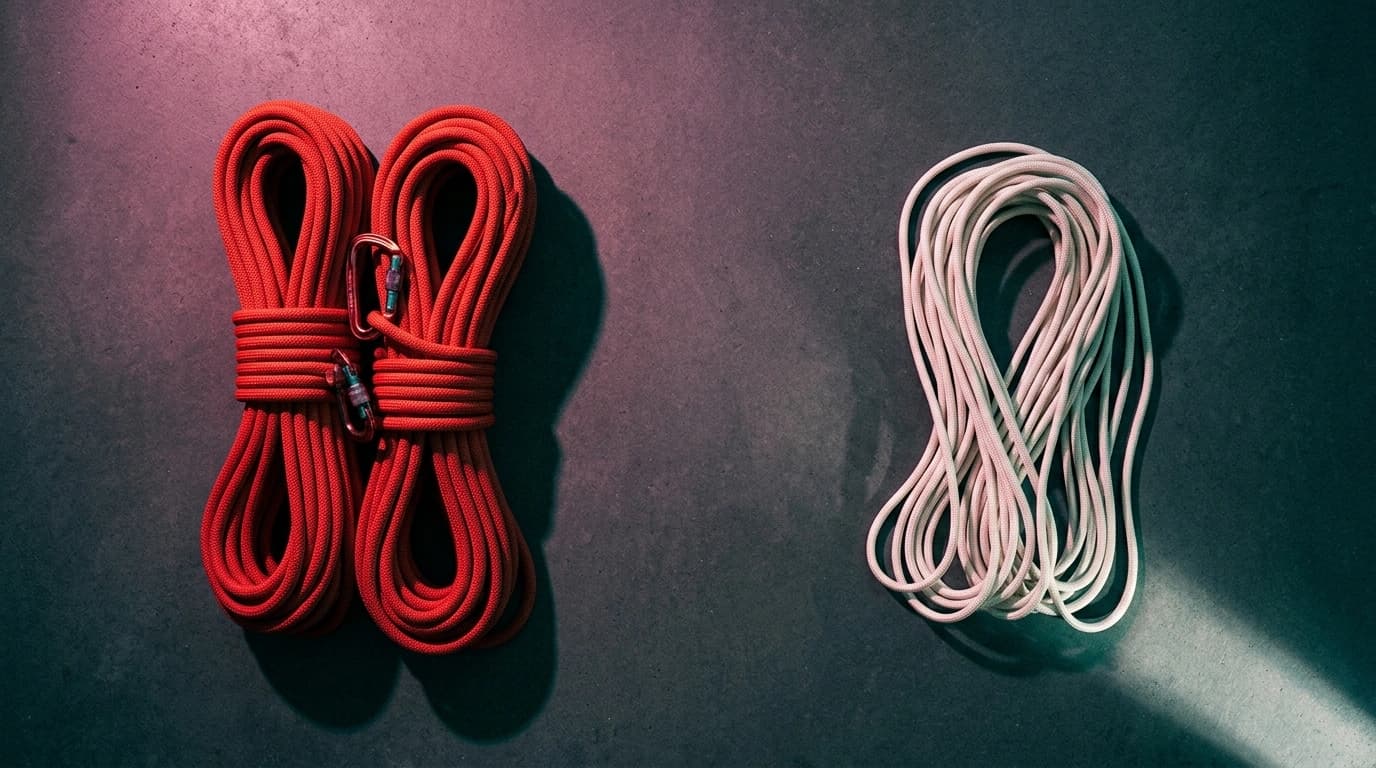
Technical alpine attempts. Any climb requiring rope work, glacier travel, or route-finding above treeline in remote terrain is a two-person minimum. A misogi partner challenge on a peak like Rainier's Liberty Ridge or a first attempt at a Colorado 14er via a technical ridge falls in this band. Solo alpinists exist. They spend years accumulating experience the misogi practitioner has not accumulated. Solo climbing at the misogi practitioner's real starting point produces unnecessary risk with none of the added recalibration.
Long open-water crossings. Open-water swims across cold lakes or between headlands require a support kayak or boat. The partner may not be swimming, but they carry radio, warmth, and evacuation capacity. In this category, group misogi vs solo misogi is a settled question. The technical demands make it partnered.
Multi-day desert or wilderness routes. A three-to-seven day route without a support system is a partnered attempt for the same safety reasons. Solo through-hikers do these things. They also spend months preparing. A misogi practitioner using a wilderness route as their annual event should not use it as their first exposure to the terrain.
In each case the rule is the same. The safety floor Itzler names ("you can't die") is enforced by design choices rather than by heroic effort during the event. A partner is one of the primary design choices that puts the safety floor in place.
When one person is the design: three misogi shapes a partner would work against
The reverse case is also real. Some attempts are meant to be solo because the psychological effect requires solitude.
Long solo wilderness sits. Three to seven days alone without company, electronics, or reading material. The event is defined by the absence of the second person. A partner makes it a hike. The Vipassana ten-day silent retreat is the closest institutional example. The point is the confrontation with an unbroken interior.
Public performance events. A thirty-minute solo piece on an instrument the practitioner has just learned, a first stand-up set at a real club, a defended talk in front of a room. The event has an audience, so the no-external-audience rule bends to allow the event itself. The event stays solo because the recalibration works against private capacity. Two people playing a duet is a different attempt.
Language-to-fluency and certification exams. A twelve-month Japanese-to-N2 attempt, a bar exam retake for a career-changer, an EMT certification. These are attempts against private capacity. Study partners help for logistics. The exam itself is solo, and the memory that gets installed is the memory of the practitioner alone in the testing room.
The shared thread across these categories is that the memory the misogi installs is the memory of having done a thing alone. Producing that memory requires actually doing it alone. Retrofitting a companion into a challenge whose whole point was the solitude produces a different psychological result and a weaker one.
The mixed model most experienced practitioners end up on
Practitioners who have done several misogis over a decade tend to converge on a mixed model, and the model is legible.
Design each year's attempt against the actual fifty percent rule, then add exactly the safety infrastructure the attempt requires. For a solo endurance attempt in known terrain, that infrastructure is a check-in system and a spouse who knows the route. For a technical alpine attempt, it is a companion and often a guide. For a cold-water crossing, it is a boat. For a solo silent retreat, it is a booked seat at a Vipassana center whose institutional infrastructure carries the safety.
The shared frame is that partnership belongs to the design layer of the practice rather than the philosophical layer. The Shinto practitioner arriving at Tsubaki with a small pilgrimage group is doing full misogi. The American runner going alone into the Sierras is doing full misogi. The rope team on Rainier and the person on a meditation cushion in Massachusetts are running the same practice under different constraints. Elliott's fifty percent rule holds across all of them. Itzler's no-audience rule holds across all of them.
The three-phase rite-of-passage frame that anthropologists use to describe rituals of this kind names only separation, liminality, and reincorporation. It says nothing about whether the transition is undertaken alone. The presence of company in the liminal middle is a design choice for the community running the ritual, and it has never been a defining feature of the form.
The remaining question, which the practitioner has to answer for themselves, is what memory they want to install and what the real technical demands of the attempt are. The two together determine the shape. For any given year, misogi with a partner or solo is downstream of both.
The choice that fits is the choice that pays off. Whether it looks impressive from outside is a separate concern.
References
- Wikipedia. Misogi entry. Confirms both solo and small-group practice within the Shinto tradition. Accessed 2026-08-12.
- Wikipedia. Jesse Itzler entry. Confirms the 29029 Everesting group endurance event co-founded in 2017. Accessed 2026-08-12.
- Wikipedia. Arnold van Gennep entry. Three-phase rite-of-passage model (separation, liminality, reincorporation) from Les rites de passage (1909).
- Easter, M. (2021). The Comfort Crisis: Embrace Discomfort to Reclaim Your Wild, Happy, Healthy Self. Rodale Books. Widely cited popular treatment of the American misogi via Itzler and Elliott.