Quiet quitting vs burnout: how to tell them apart
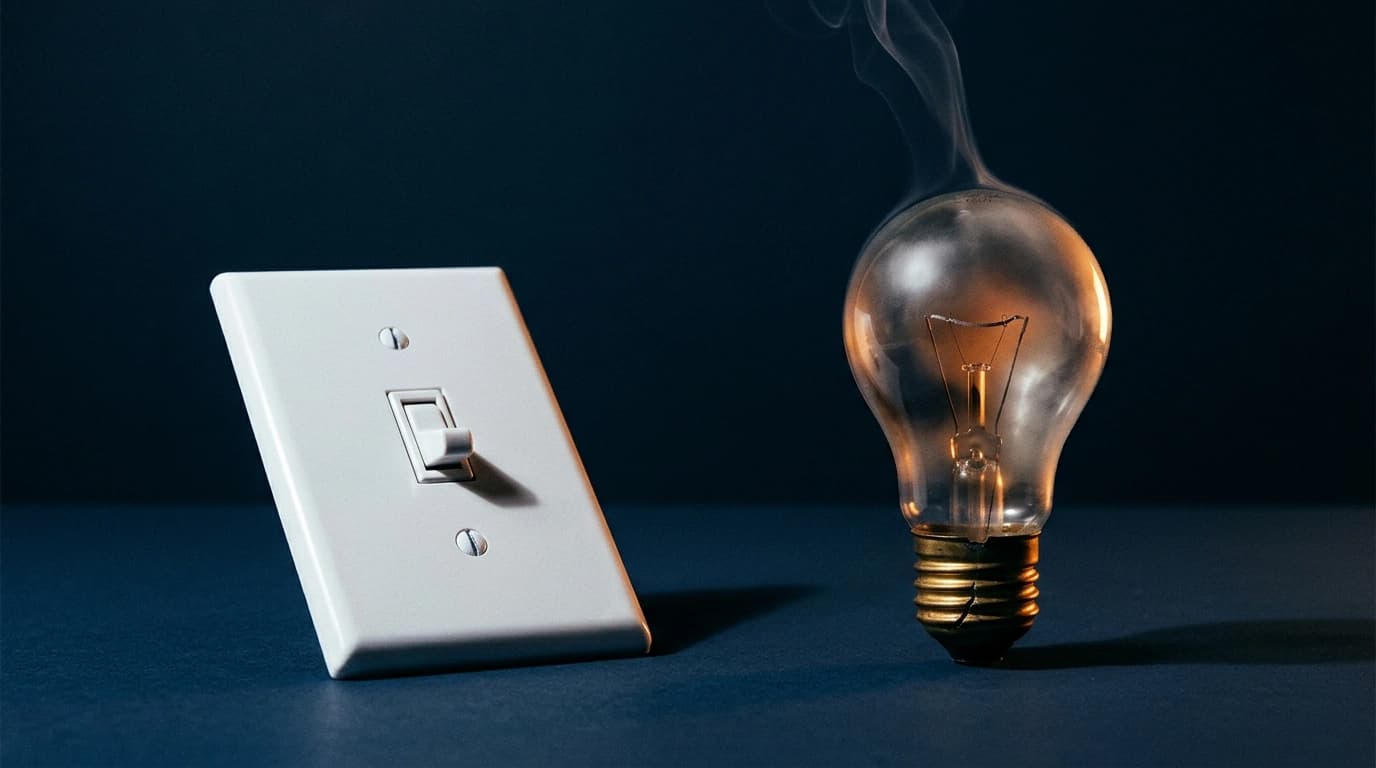
Quiet quitting and burnout describe different layers of the same situation. One is a behavior at work: declining the unpaid overflow that had become normalized in a salaried role. The other is a state inside a person, marked by exhaustion, cynicism, and a reduced sense of accomplishment, which the WHO classifies as an occupational syndrome. When someone uses both words for what they're going through, they often mean the second and reach for the first because it sounds like a choice.
The category mistake at the bottom of the question
Most workers who say they're quiet quitting are in early burnout. They scaled back the after-hours work because they couldn't sustain it, and the visible scale-back picked up the "quiet quitting" label because that label was already in the air. A meaningful share of the people self-diagnosing burnout in 2026 are doing something cleaner: they've quietly decided to stop overdelivering, and there's no non-shameful word for that choice yet. The same vocabulary covers two very different problems.
The stakes are practical. The move that helps one makes the other worse. Doubling down on rest and recovery is the right move for burnout and pointless for quiet quitting. Renegotiating scope and refusing the overflow is the right move for quiet quitting and inadequate for burnout. Telling the difference between quiet quitting and burnout is what separates a useful next step from a wasted month, which is why the quiet quitting vs burnout question keeps coming back to the search bar long after every think-piece has answered it.
Quiet quitting, the way the term was actually used
The term entered the popular vocabulary in the summer of 2022 after a worker named Zaid Khan posted a short TikTok using the phrase. What he was describing was the refusal of the unpaid overflow that had become normalized in many salaried roles: the after-hours email, the late-Slack messages, the volunteering for a second project on top of an already-full one. The behavior is closer to what older labor language called "working to rule" than to anything resembling laziness.
The behavior is also widespread. By September 2022, Gallup put quiet quitters at at least 50% of the U.S. workforce, with only 32% of employees engaged and 18% actively disengaged that quarter. Jim Harter, Gallup's chief scientist for workplace and wellbeing, described the group precisely: "Many quiet quitters fit Gallup's definition of being 'not engaged' at work — people who do the minimum required and are psychologically detached from their job."
The signs of quiet quitting are observable from outside. The calendar gets defended, and meetings that used to spill an hour over now end on time. Emails sent after 6 p.m. stop getting answers the same evening. The pattern of raising a hand for extra projects goes quiet. Output during paid hours holds steady, and sometimes improves, because the energy that used to leak into 11 p.m. work is now available between 9 and 5.
The behavior is sometimes a healthy correction. A worker who had been compensating for thin staffing or a vague job description finally draws the line at their actual scope, and the line holds. Other times it's the first visible signal of something heavier underneath: the line is being drawn out of depletion, with nothing left to give. The behavior looks the same from outside either way, which is why one observable symptom alone rarely settles the question.
Burnout, the way the WHO actually classifies it
The WHO classifies burnout as an occupational syndrome (ICD-11 code QD85), arising from chronic workplace stress that hasn't been successfully managed. Christina Maslach's three-axis model, which the main burnout piece covers in detail, names the lived experience: exhaustion, cynicism toward the work and the people in it, and a creeping sense that nothing produced is good enough no matter the effort.
When sorting out quiet quitting vs burnout, two tests help without requiring any formal diagnosis. The first is whether the flatness shows up off the clock. Burnout doesn't stay at work. A burned-out person doesn't enjoy the weekend hike they used to enjoy, has trouble finishing shows they used to finish in one sitting, and stops making the kinds of plans that used to feel automatic. Quiet quitting tends to free energy for life outside work, and the protected evenings get filled with the things the over-extension was crowding out. A roommate or partner can usually call this one without being asked.
The second test is what happens to output during paid hours. Burnout reduces output even inside the workday. Quiet quitting holds output steady within paid hours and refuses the overflow outside them. A manager doesn't always see the difference because total weekly hours look lower in both cases. Per-hour productivity moves in opposite directions, though. Burned-out workers slow down even at their desks, while quiet quitters often speed up because the energy that used to drain into late-evening overflow is available again in the middle of the workday.
Why each one slides into the other (and which direction is more common)
The two overlap because one tends to slide into the other. Burnout leading to quiet quitting is the more common direction. A worker hits exhaustion, can't sustain the unpaid overflow, falls back to the job description by necessity, and the visible behavior gets labeled as a deliberate choice when it was really capitulation. Some people in this position adopt the label proudly because it sounds like agency. The agency framing is partly accurate, and it describes a behavior that grew out of a state, which means treating the behavior as the whole story misses what's underneath. Quiet quitting because of burnout has become the common case in 2026. The scale backs that up: Gallup's global workplace tracking found 59% of the world's employees quiet quitting in 2023, a disengagement level Gallup priced at $8.8 trillion in lost productivity.
Quiet quitting leading to burnout is rarer but real. Someone who sets a boundary at work without addressing a deeper mismatch in the role itself may protect their evenings while still being slowly worn down by the day-job itself. The boundary delays the visible collapse without resolving the state underneath, and a year later the same person can be in burnout despite having drawn the line that was supposed to prevent it.
Someone caught between quiet quitting or burnout is often in the mid-overlap zone: doing both at once and unsure which is driving. One diagnostic question helps here: when the after-hours work stops for two full weeks, does the dread on Monday morning lift? If yes, the dread was the over-extension. The person is in a quiet-quitting-as-correction zone, and the line they drew is doing its job. If the dread on Monday stays the same or gets worse, the dread is rooted in the state itself, beyond what a schedule change can fix.
What to do, and what NOT to do, with the diagnosis
Most people reach for quiet quitting as the label because it sounds like agency and burnout sounds like collapse. The cleaner move is to invert that instinct: assume burnout first, treat it as the more dangerous condition with the longer recovery curve, and only walk back to quiet quitting after two weeks of protected evenings have actually restored a baseline.
Pick a Monday for the two-week test. Stop the after-hours work cleanly for two full weeks, with no late Slack, no weekend email, and no volunteering for the extra thing. At the end of week two, check the Monday morning dread. If it has lifted, the over-extension was the problem and the boundary is the answer. If it hasn't lifted, the boundary is necessary but not sufficient, and the main burnout piece is the next read. Anyone still asking themselves "am I quiet quitting or burned out" after that test has their answer in hand.
Knowing which side a person is on is most of what determines what to do next.
References
- World Health Organization. "Burn-out an 'occupational phenomenon': International Classification of Diseases." 28 May 2019. ICD-11 code QD85, used here for the occupational-syndrome framing that distinguishes burnout from quiet-quitting behavior.
- Wikipedia. "Quiet quitting." Source for the Zaid Khan / summer-2022 TikTok origin of the term and its observable behavior pattern.
- Harter, J. (2022, September 6). Is Quiet Quitting Real? Gallup Workplace. gallup.com. Source for the 50%-of-workforce figure, Q2 2022 engagement numbers, and the Harter quotation.
- Gallup. (2023, June 13). Globally, Employees Are More Engaged and More Stressed. State of the Global Workplace. gallup.com. Source for the 59% global quiet-quitting figure and the $8.8 trillion productivity estimate.