Why You Stopped Having Hobbies (And When It Started)
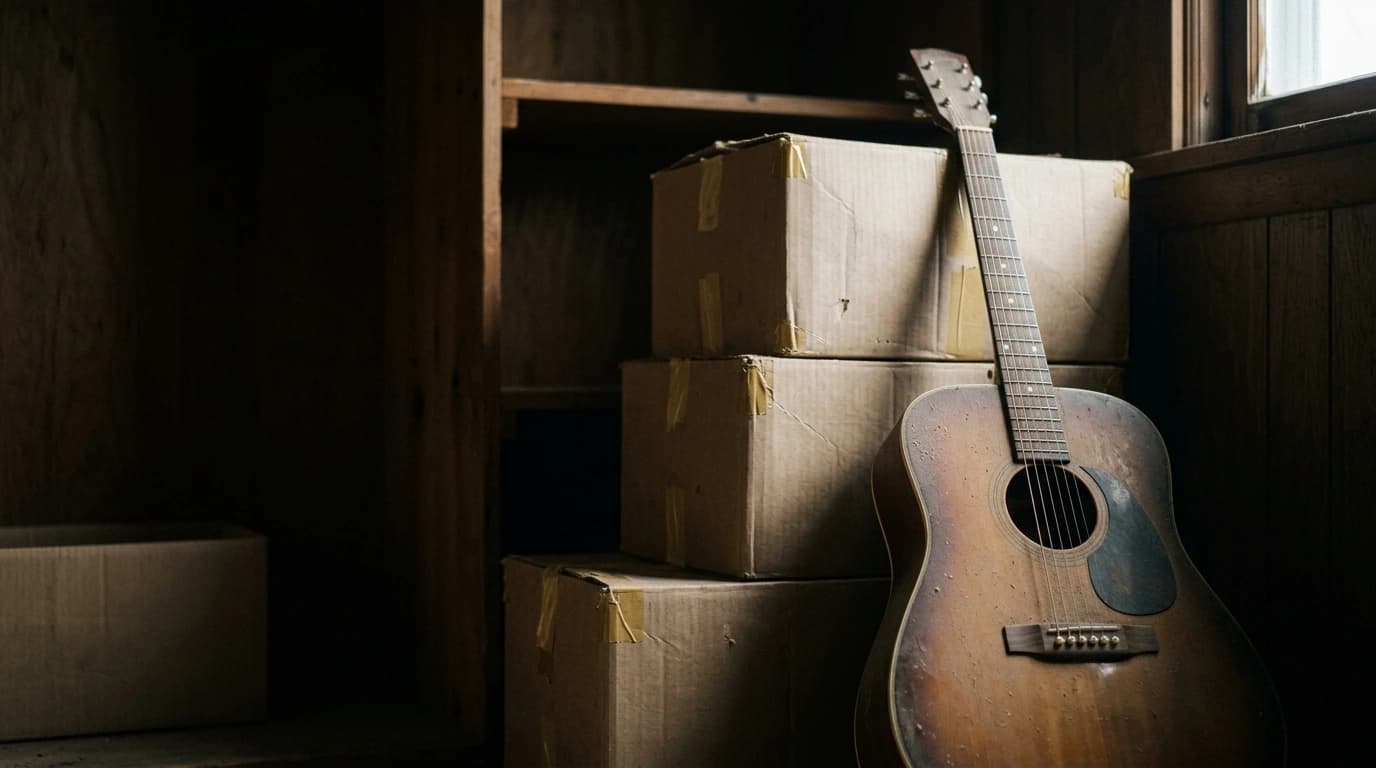
There was a version of you that lost whole afternoons to something useless. Building models. Sketching badly. Learning three chords and playing them wrong for hours. Then, at some point, you looked up and the hobby was gone, and you could not name the day it left. Most people can't. That is the strange part of why you stopped having hobbies: there is almost never a decision, just a slow reassignment of hours until the shelf where the paints sat became the shelf where the mail piles up. This is a look at the causes. Not a rescue plan.
The time that used to be yours
As a child, your time arrived in large uncommitted blocks. Nobody asked what a Saturday was for. You filled it, and the filling was the point. Somewhere in the crossing into adult life, time changed shape. It got sliced into obligations, each hour quietly tagged with a purpose and a payoff.
Researchers who study human motivation, including Edward Deci and Richard Ryan in their work on self-determination theory, describe a difference between doing something because it satisfies you from the inside and doing it for an external reward. Childhood free play sits almost entirely in the first category. You drew because drawing felt good in your hand. Adult time drifts toward the second category, where every activity is expected to return something measurable: money, status, a fitter body, a longer résumé.
Once that expectation sets in, an unproductive hour starts to feel suspect. This is the quiet developmental shift under so many stories about why adults stop having hobbies. The hours did not disappear. The permission to spend them without a reason did.
School trained the pattern first. Long before your first job, years of grading turned effort into something that gets scored and ranked. Then work extends the lesson, since almost every adult institution rewards output and measures it. By the time you are managing a career, the instinct to ask what am I getting out of this runs automatically, even on a quiet Sunday when nobody is watching and nothing is due. Free play never survived contact with that instinct intact. It got optimized, deferred, and eventually forgotten.
When rest started to feel like guilt
Sit with a genuine hobby for twenty minutes and a small voice often shows up. You could be answering emails. You could be doing something that counts. The optimization mindset, the one that treats every waking hour as a resource to be spent well, has a way of turning rest into a low-grade guilt.
The trouble is that a hobby only works when it is a little bit pointless. The moment you attach a target to it, the internal enjoyment can leak out. Self-determination theory documents this as the overjustification effect: when you start rewarding an activity that was already fun on its own, the outside reward can crowd out the inside one, and interest drops. Deci and Ryan built decades of research around this tension between intrinsic and external motivation.
Monetization pressure is the sharpest version. Get mildly good at baking and someone will ask when you are opening a shop. Post one decent photo and the advice arrives: you should sell those. The culture struggles to hold the idea that you might bake, or shoot, or write, for no return at all. So the knitting becomes an Etsy plan, the plan becomes a chore, and the chore quietly dies. What began as play ends as an abandoned business. Plenty of people who say I gave up my hobbies really gave up on a side hustle they never wanted in the first place.
Hustle culture sharpens the guilt into something almost moral. In a world of visible side incomes and public self-improvement, an hour spent on a pursuit that earns nothing and produces nothing shareable can feel wasteful, even a little irresponsible. So people quietly reassign that hour to something with a return, and the harmless activity that asked nothing of them loses every argument. The result is a familiar adult contradiction: the very people most desperate for restoration are the ones most convinced they have not earned it.
The story that serious adults are too busy for this
There is also an identity script running underneath all of this, and it is worth saying out loud. Somewhere we absorbed the notion that hobbies are for children and retirees, and that a serious working adult in their prime is too busy, too important, too responsible for unstructured play. Busyness became a status symbol. Answer "how are you" with "slammed" and it reads as success.
Inside that script, a hobby looks like a confession that you have spare capacity, which sounds a lot like you are not working hard enough. So people perform fullness. They let the guitar gather dust and mention, almost proudly, that they have no time for that kind of thing anymore. The strange result is a life crowded with obligations and empty of anything chosen freely. When people describe having no hobbies as an adult, this identity story is usually somewhere in the mix, quietly vetoing the very activities that would make them feel like themselves.
I'm bad at it, so why bother
Children are shameless beginners. They will sing off-key, draw a purple dog, and feel no injury. Adults have usually lost that. We know what good looks like, we have seen the experts online, and the gap between our clumsy first attempts and their polished work feels humiliating. So we quit early, before the clumsiness passes.
This is where the psychologist Mihaly Csikszentmihalyi's research on flow, the state of complete absorption, becomes useful for understanding the trap. Flow shows up when the challenge of a task roughly matches your skill. Too hard, and you feel anxious. Too easy, and you feel bored. A beginner sits in the anxious zone by definition, because the challenge is high and the skill is low. Flow, and the deep enjoyment that comes with it, waits on the far side of that awkward stretch.
Perfectionism cuts the journey off right there. The internal critic frames early incompetence as proof that you have no talent, rather than as the normal entry fee for any new skill. So the watercolors go back in the drawer after one muddy attempt. Many people who say they lost interest in hobbies did not lose interest at all. They lost the nerve to be bad at something in front of themselves.
Social comparison makes the drawer close faster. When your first ceramic bowl sits next to a feed full of studio potters, the honest beginner result reads as failure, and the tutorial that promised ease only deepens the shame. Csikszentmihalyi called the deeply absorbing activity autotelic, meaning it is worth doing for its own sake. Perfectionism poisons exactly that. It turns a private pleasure into a public audition where you are the only critic, and the verdict is always harsh. An adult who cannot tolerate being a novice has quietly locked themselves out of every skill they do not already possess.
The screen that eats the evening
Then there is the simplest cause, and maybe the heaviest one. The active leisure that used to fill an evening now competes with a device engineered to hold your attention indefinitely, and the device usually wins.
The American Time Use Survey, run by the U.S. Bureau of Labor Statistics, tracks how people actually spend their days. Its time use data on leisure has shown for years that watching television is by far the single largest leisure activity for American adults, absorbing more than half of all leisure time on an average day. Scrolling and streaming have folded into that same passive block. The hours technically exist. They are just already spoken for by the path of least resistance.
Passive leisure feels restful in the moment and leaves surprisingly little behind. Active, absorbing leisure is where the real return sits. Sarah Pressman and colleagues, in a 2009 study of enjoyable leisure activities, found that people who spent more time on those pursuits had lower blood pressure, lower stress, and better psychological wellbeing. A hobby does measurable work. A feed rarely does. Yet the feed is right there, frictionless, and the guitar is across the room in its case. That small difference in effort decides most evenings.
The parenthood squeeze
For a large share of adults, one event closes the gap almost overnight. A child arrives, and every uncommitted minute gets claimed. This one is less about mindset and more about arithmetic. Sleep shrinks, logistics multiply, and the discretionary hours that a hobby lived in simply stop existing for a stretch of years.
What makes it stick is that the hobby-free habit outlasts the crisis. The intense-demand phase eases as kids grow, but by then the muscle for personal leisure has gone slack. The paints stayed packed so long that unpacking them feels almost foreign. Guilt tightens the knot further, since time spent on yourself can feel stolen from the family. So the pause quietly becomes permanent, and a parent looks up a decade later and realizes they cannot remember the last thing they did purely for their own enjoyment.
The squeeze does not fall evenly, either. Caregiving of every kind, for young children, aging parents, or a sick partner, tends to eat discretionary time from whoever is closest to it, and that person often absorbs the loss without naming it. There is rarely a moment where anyone decides the hobby has to go. It just becomes the first thing dropped when the schedule tightens and the last thing picked back up when it loosens, if it ever gets picked back up at all.
It's reversible, and that matters
None of these forces is a character flaw. They are structural pressures acting on ordinary people, which is exactly why the pattern is so common and why the tone here is meant to be diagnostic rather than scolding. The optimization habit, the monetization reflex, the serious-adult script, the perfectionism, the scroll, the parenthood squeeze. Any one of them can close the door on play. Together they usually do.
It also helps to notice that the honest answer to why you stopped having hobbies is almost always plural. Rarely is it one villain. A perfectionist streak meets a demanding job meets a phone that is always within reach, and the combination does what no single pressure could. Seeing the specific stack that applies to you is the whole point of naming the causes, because a vague sense that you have simply changed leaves you nothing to work with.
The hopeful part is that a hobby is a habit and an identity, and both can be rebuilt. The capacity for flow does not expire with age. The enjoyment that Pressman's work links to real health outcomes stays available. Getting back into hobbies for adults starts with noticing which of these causes is actually running your particular case, because the fix looks different for a perfectionist than for an exhausted parent. It is also worth understanding what kind of satisfaction you are actually chasing, a distinction explored in the difference between hedonic and eudaimonic wellbeing.
For now, the useful move is smaller than a plan. Just find the shelf where the paints used to sit, and remember that the hours never actually left.
References
- Csikszentmihalyi, Mihaly. Flow (psychology). Wikipedia, 2024. flow, the state of complete absorption
- Deci, Edward L., and Richard M. Ryan. Self-Determination Theory. Wikipedia, 2024. self-determination theory
- U.S. Bureau of Labor Statistics. American Time Use Survey. BLS, 2024. time use data on leisure
- Pressman, Sarah D., et al. Association of enjoyable leisure activities with psychological and physical well-being. Psychosomatic Medicine, 2009. enjoyable leisure activities